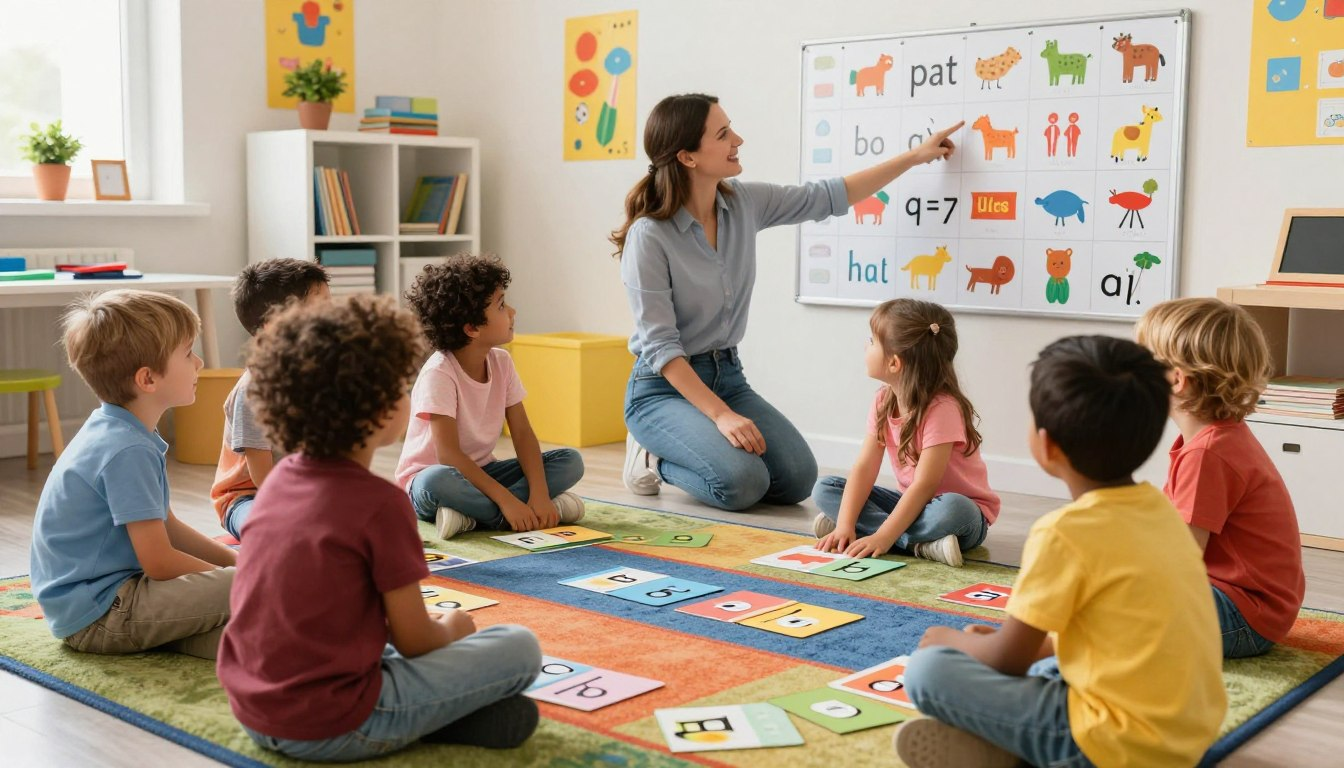
Have you ever wondered why some kids read easily while others struggle? Learning to read is like solving a puzzle. But, it starts with teaching the basics of language.
Phonics blending for 5 year olds helps kids go from seeing letters to reading words. It turns sounds into words they can understand.
Building confidence is key in learning to read. Simple games at home can help a lot. Soon, your child will read better and feel more confident.
Understanding the Basics of Phonics Blending for 5 Year Olds

Phonics blending is key for 5 year olds to read well. It’s about mixing sounds to make words. Your child will learn to smoothly connect sounds into words.
What is Phonics Blending?
Blending is like building a bridge with sounds. Each sound is a plank. When your child sees “cat,” they make sounds /k/, /a/, and /t/ then say “cat.”
“Reading is a foundational skill that opens the door to all other learning, and it begins with the simple act of hearing and blending sounds.”
Why Five is the Ideal Age for Blending
Five is a great age for learning to read. Kids are curious and ready to learn. They can tell different sounds apart.
Learning to blend sounds now helps a lot. It makes them feel empowered and capable in school. It also helps them love reading more.
The Connection Between Sounds and Letters
Letters and sounds are connected. This is called the alphabetic principle. Your child needs to know this to read well.
Knowing this helps them read new words. It’s a valuable tool for them. It makes reading fun and meaningful.
Preparing Your Child for Early Literacy Success

You can help your child get better at early literacy skills with simple habits. First, they need to know letters and hear sounds well. This makes reading easier for them.
Building a Foundation of Letter Recognition
Knowing letters is key to reading. Teach your child both big and small letters. Look for letters in cereal boxes, street signs, or books every day.
When they know letters fast, they can focus on sounds. Use fun games like magnetic letters or puzzles to make learning fun.
Developing Auditory Discrimination Skills
Being able to hear sound differences is important. It’s a big part of early literacy skills. Play games where they find the sound of a word, like “cat” or “cup”.
These games help them listen better. When they can hear sounds, putting them together is easier. Keep these games short and fun.
Setting a Positive Tone for Learning
Learning should be fun and not stressful. If it feels hard, they might not want to read. Celebrate small wins to make reading exciting.
The table below shows how to help your child grow:
| Skill Level | Focus Area | Recommended Activity |
|---|---|---|
| Beginner | Letter Recognition | Alphabet scavenger hunts |
| Intermediate | Auditory Skills | Rhyming word games |
| Advanced | Early Blending | Sounding out CVC words |
Focus on these early literacy skills to help your child. Every child learns at their own pace. Stay patient and keep it fun.
The Role of Phonological Awareness in Reading Development

Phonological awareness is key to moving from speaking to reading. It’s a big part of reading development that kids need before they start reading. By doing phonological awareness activities, you help your child understand the sounds of their language.
Identifying Rhymes and Alliteration
Playing with rhymes is a great way to improve listening skills. When you say “cat” and “hat” sound the same, you teach your child to find patterns. Alliteration, or words starting with the same sound, also helps sharpen their listening.
Practicing Syllable Counting
Syllables are the sounds in words that make them easier to understand. You can practice this by having your child clap for each sound in a word. For example, “apple” gets two claps, and “dog” gets one. This helps kids see words as smaller parts.
The Importance of Phonemic Awareness
When kids get good at big sounds, they’re ready for single sounds, called phonemes. Phonemic awareness is the top level, including skills like isolating and blending sounds. These skills are key for reading because they help kids build and break down words. Consistent practice in these areas helps your child become a confident reader.
Essential Kindergarten Reading Strategies for Parents

You can make reading fun for your child with simple habits. A structured place helps them feel safe learning about letters and sounds. These kindergarten reading strategies make learning a part of your day.
Modeling the Blending Process
Children learn by watching you. When you show them phonics blending for 5 year olds, they see how to make words. Say sounds slowly and then blend them together.
Have your child watch your mouth as you say each sound. This shows them reading is easy and fun. It helps them learn better.
Using CVC Words for Initial Success
Start with CVC words like cat, sun, or dog. They are simple and help beginners. These words are great for practicing without getting confused.
Using these words helps your child feel successful. Success builds confidence. This is key for learning to read well.
Consistency and Short Practice Sessions
Short, regular practice is better than long sessions. Try to keep practice to ten minutes. This keeps it fun and not a chore.
The table below shows how to practice well. It keeps your child motivated and learning.
| Strategy | Focus Area | Expected Outcome |
|---|---|---|
| Modeling | Auditory clarity | Improved sound recognition |
| CVC Practice | Pattern mastery | Increased reading speed |
| Short Sessions | Engagement levels | Reduced frustration |
| Daily Routine | Habit formation | Long-term retention |
Using these kindergarten reading strategies creates a good learning space. Every child learns at their own pace. Celebrate their small wins. Your patience and support are key to their reading journey.
Interactive Games to Master Sound Segmentation
Interactive games can change how your child learns to read. They help kids break words into sounds. This is a vital step in their learning.
Using these games makes learning fun and hands-on. It’s a great way to help your child.
The Sound Box Method
The sound box method is a classic tool. It helps kids see how sounds fit into words. You draw boxes for each sound in a word.
As you say a word, your child puts a small object in each box. This method is great for building phonemic awareness. It helps kids see language in a real way.
Start with simple words like “at” or “in”. Then move to words with three sounds.
I Spy with Phonetic Sounds
“I Spy” can be a learning game. Instead of picking by color, pick by sound. Say, “I spy something that starts with the /b/ sound,” and wait for your child to find the ball.
This game helps kids listen to word beginnings. As they get better, try ending or middle sounds. It’s a fantastic way to practice without special equipment.
Segmenting Words with Physical Tokens
Physical tokens make sounds easy to see. Use buttons, coins, or cereal pieces. When you say “cat,” your child moves a token for each sound: /c/ – /a/ – /t/.
This hands-on method makes sounds tangible and real. By moving tokens, kids connect sounds with letters. Regular practice builds confidence in reading.
Blending Sounds Together Using Physical Movement
You can make phonics fun for your five-year-old. Use physical movement to make learning concrete and manageable. This is great for kids who like to move.
The Arm-Slide Technique
The arm-slide helps your child see sounds in words. They touch their shoulder for the first sound, elbow for the middle, and wrist for the last.
They say each sound as they touch it. Then, they slide their hand from shoulder to wrist. This shows how sounds blend into words.
Jumping Through Sound Stations
For active kids, set up stations around the room. Each station has a letter or sound. Your child jumps from station to station, saying the sound at each.
At the last station, they jump and say the whole word. This makes learning fun and builds confidence. It shows words are made of parts that come together.
Clapping Out the Sounds
Clapping helps your child feel language’s rhythm. They clap once for each sound in a word. For “cat,” they clap three times.
This method makes learning sounds fun. It helps your child blend sounds together. Regular practice makes phonics easy and stress-free.
Using Educational Phonics Tools at Home
Building a strong reading foundation starts with the right tools. Create a special space for practice. This turns sounds into real experiences for your child.
Magnetic Letters and Whiteboards
Magnetic letters are great for building words on a board. When your child moves these letters, they learn how words are made. A small whiteboard lets them write letters, linking sounds to symbols.
Flip pads are also useful for word families. They help kids see patterns in words. This makes learning fun, not a chore.
Phonics Flashcards for Daily Drills
Consistency is key, and flashcards are perfect for daily practice. They help review letter sounds and common word patterns. Keep these sessions short to keep your child focused.
Make drills interactive by asking your child to sound out words. This keeps them engaged and shows you what they know. Regular practice builds confidence.
Digital Apps and Interactive Literacy Resources
Modern tech offers fun apps for learning. These apps use bright colors and sounds to make learning fun. They give instant feedback on how well your child pronounces words.
Choose apps that focus on phonics and blending. Quality digital resources give your child the extra practice they need. Always watch how much time they spend on screens to keep learning positive.
Effective Beginner Reading Techniques for Daily Practice
You can make your child’s reading better by using special techniques every day. Being consistent helps build confidence. The right beginner reading techniques will help your child read smoothly.
The Continuous Blending Method
Many kids start by reading words in a choppy way. The continuous blending method helps them keep sounds together. Instead of saying “c-a-t,” they say “cccaaat.”
This method stops the gap between sounds that confuses kids. It makes words easier to recognize. It’s a great way to help kids move from sounds to whole words.
Using Decodable Books for Reinforcement
Decodable books are key educational phonics tools. They have words that follow rules kids are learning. These books help kids practice in a real way without feeling lost.
When kids read a story using sounds they know, they feel more confident. Look for books that match their current lessons. This targeted practice helps them decode, not just guess.
Incorporating Sight Words Alongside Phonics
Phonics is the base for decoding, but sight words make reading smoother. Some words, like “the” or “said,” don’t follow rules and must be memorized. Adding these words to your routine balances literacy.
Use flashcards or games to make sight word practice fun. Mixing these words with phonics drills helps kids read sentences easily. This mix helps them build vocabulary and keep strong decoding skills.
| Technique | Primary Benefit | Best Practice |
|---|---|---|
| Continuous Blending | Improves word fluency | Hold sounds together |
| Decodable Books | Reinforces phonics rules | Match to current level |
| Sight Word Drills | Builds vocabulary | Use flashcard games |
Troubleshooting Common Challenges in Blending
Even the most enthusiastic young learners can hit a wall when practicing phonics. You can use specificbeginner reading techniquesto navigate these hurdles. It’s important to know when to pause or change your approach.
Addressing Frustration and Fatigue
Children often signal fatigue through fidgeting, sighing, or losing focus during a lesson. If you notice these signs, stop the session immediately. Forcing a tired child to continuewill only create a negative association with reading.
Try to keep your practice sessions short and upbeat. If your child seems overwhelmed, pivot to a game-based activity or take a break to move around. Keeping the mood light ensures that your child remains eager to return to their books later.
Helping Children Who Guess Instead of Blend
Many children guess words based on the first letter or the picture on the page. To combat this, gently cover the picture or the end of the word to force them to focus on the individual sounds. Remind them to“slide”through the sounds slowly.
Usingbeginner reading techniqueslike the “continuous blending” method can help bridge the gap between individual sounds and whole words. If they guess incorrectly, calmly ask them to look at the second or third letter again. This reinforces the habit of decoding.
When to Seek Additional Support
Most children will eventually master blending with consistent, patient practice at home. But if you notice persistent difficulty, it may be time to consult a professional. A teacher or reading specialist can provide a fresh perspective and identify if there are underlying issues.
| Challenge | Immediate Action | Long-term Strategy |
|---|---|---|
| Frequent Guessing | Cover the picture | Focus on phoneme isolation |
| High Frustration | Take a break | Shorten practice sessions |
| Lack of Progress | Review basics | Consult a specialist |
Seeking help is not a sign of failure but a proactive step toward your child’s success. Early intervention often makes a significant difference in building confidence. Trust your instincts as a parent, and remember that every child learns at their own unique pace.
Creating a Literacy-Rich Environment for Your Child
Surround your five-year-old with books and language. This helps them learn to read. A home filled with print gives them the early literacy skills they need.
This makes learning fun, not a chore. It’s a part of everyday life.
Curating a Home Library
A good bookshelf is key to a literacy-rich home. You don’t need lots of books. Just make sure they are varied and easy to get to.
- Include a mix of picture books, rhyming stories, and non-fiction topics.
- Keep books on low shelves where your child can reach them independently.
- Rotate your children’s literacy resources every few weeks to keep interest high.
Reading Aloud and Discussing Sounds
Reading aloud is the best way to build vocabulary and comprehension. As you read, point out letter sounds or rhymes.
Engage your child by asking questions about the characters or predicting what might happen next. This helps them connect sounds to words, making phonemic awareness fun.
Making Literacy Part of Daily Routines
You can make language development part of your daily life. Look for chances to highlight letters and sounds during normal activities.
For example, point out signs while driving or talk about sounds in ingredients while cooking. Using children’s literacy resources in these moments shows reading’s importance. This consistent exposure helps them master early literacy skills and become confident readers.
Tracking Progress and Celebrating Milestones
Seeing your child learn new sounds is very rewarding. It shows how they’re improving in early literacy skills. By watching them every day, you can see what works best for them.
Keeping a Simple Reading Journal
A simple notebook is a great tool for tracking your child’s progress. You don’t need a complicated system. Just write down the sounds they master and the fun activities they enjoy.
- Note the specific CVC words your child successfully blended.
- Record any sounds that seem to cause repeated hesitation.
- Write down the games or activities that sparked the most enthusiasm.
“The journey of a thousand miles begins with a single step, and every sound mastered is a step toward a lifetime of reading.”
Recognizing Small Wins in Sounding Out
It’s important to celebrate small victories. When your child learns a new word, say “Great job!” right away. These moments help build their confidence.
Use a chart or sticker board to show their progress. Seeing their achievements can make them feel proud. This makes practice fun, not a chore.
Adjusting Your Approach Based on Growth
As your child gets better, their needs change. They might want to learn more complex words or sentences. Being flexible helps keep them challenged but not frustrated.
If they struggle with a sound, go back to basics. Changing your teaching to match their growth is key. Stay patient and keep the learning space supportive as they grow.
Conclusion
Learning phonics blending is key for your child’s reading growth. It lets them read books and stories on their own.
You can help a lot by making reading a daily habit. Short practice times build their confidence. Your patience is the most important tool.
Make your home a place where language is fun. Use Scholastic books or LeapFrog games to keep it exciting. These tools help your child learn to read in a fun way.
Look for when your child starts reading words by themselves. This shows your hard work is paying off. Keep watching their progress and change activities as needed.
Tell other parents about phonics games you like. Your efforts help others support early reading at home. Every word your child reads brings them closer to a world of learning.
FAQ
Q: What exactly is phonics blending for 5 year olds, and why is it important?
A: Phonics blending is when kids join sounds together to make words. It’s like saying “bat” by blending /b/, /a/, and /t/. This skill is key for reading because it helps kids decode words on their own.
Q: How do phonological awareness activities prepare my child for reading?
A: These activities help kids hear and play with sounds. Games like rhyming or clapping syllables improve their listening skills. Programs like Heggerty Phonemic Awareness focus on these skills. This way, when kids see letters, they can already hear the sounds.
Q: Why are CVC words emphasized in most kindergarten reading strategies?
A: CVC words are simple and easy to start with. They follow a predictable pattern, making them perfect for beginners. Using books like Scholastic decodable readers helps kids build confidence by practicing easy words.
Q: What are the best educational phonics tools to keep at home?
A: You need both hands-on and digital tools. Physical items like magnetic letters and flashcards are great for building words. Digital tools like ABCmouse and LeapFrog games make learning fun through games and repetition.
Q: What beginner reading techniques can I use if my child is struggling to blend sounds?
A: If your child has trouble blending sounds, try the continuous blending method. Encourage them to say sounds together without stopping. This method, found in Success for All, helps keep sounds in their memory.
Q: How long should our daily practice sessions be to ensure steady reading development?
A: At five, it’s better to practice often but briefly. Aim for 5 to 10 minutes, once or twice a day. Short sessions keep reading fun and prevent getting tired. Using fun tools in these short times helps a lot.