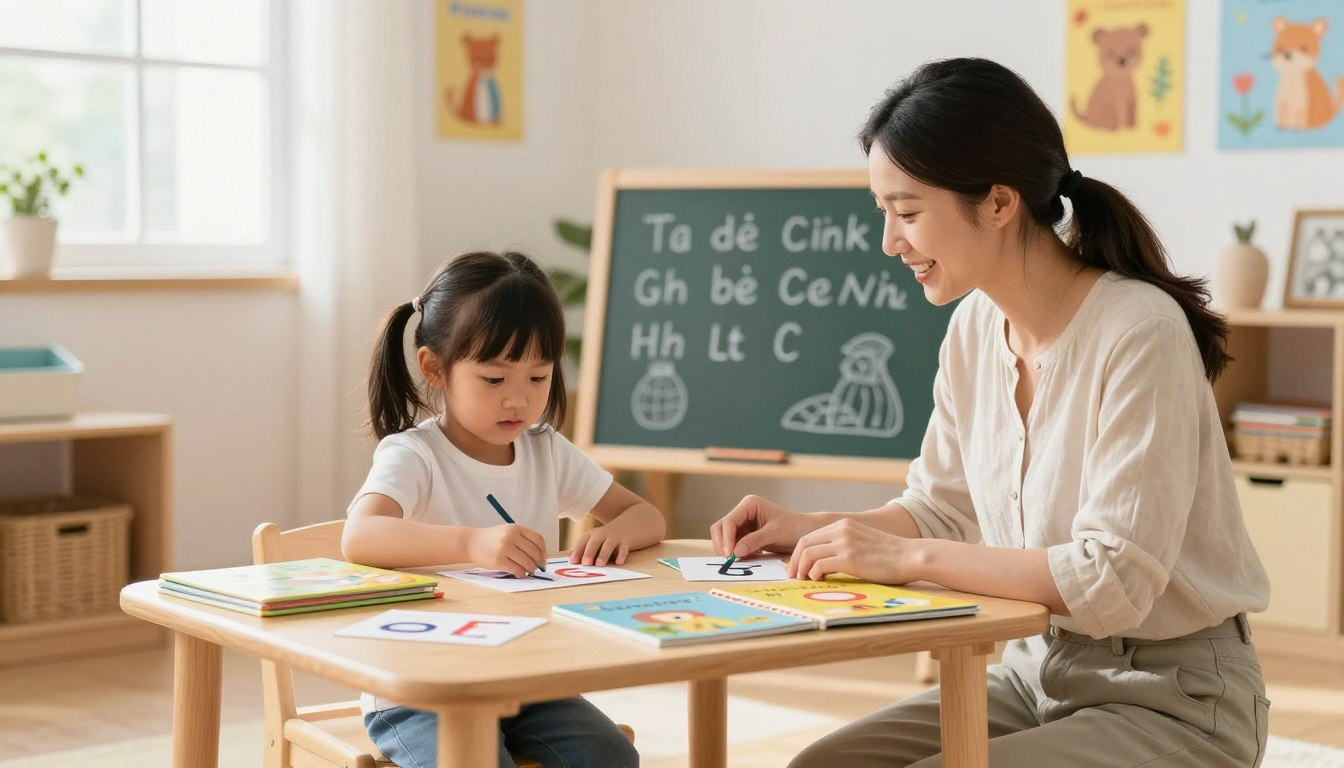
Starting to teach reading can feel scary. But, teaching reading can be fun and easy. By making reading a daily, enjoyable part of life, you can make it exciting for your child.
Studies show kids who read well do better in school. Learning to read opens up a world of possibilities for your child. If you’re wondering how to teach reading to a 5 year old, this guide will help you.
Building confidence is what matters most. With patience and the right steps, you can help your child love books and stories forever.
- Literacy is the essential building block for academic achievement.
- Consistent, playful habits make learning enjoyable for children.
- A structured plan reduces parental stress and boosts student confidence.
Understanding the Foundations of Early Literacy
Children soak up words and sounds all around them. This natural curiosity helps them learn to read. A strong start in reading means they’ll do well in school and learn more.
Assessing Your Child’s Readiness
Every child grows at their own speed. Look for signs they’re ready to learn to read. This might be when they show interest in books or ask about letters.
Don’t rush them. Watch how they enjoy stories and language during play. If they like listening to you read, they’re ready to start learning to read.
The Role of Phonological Awareness
Phonological awareness is key. It lets children hear and play with sounds in words. This skill is vital for reading.
Help them develop this skill with songs, rhymes, and word games. Focus on sounds, not just letters. This helps them get ready for reading.
Creating a Literacy-Rich Home Environment
You can make your home a place where reading is loved. Fill your child’s world with books and print. This helps them learn to read early.
Selecting Age-Appropriate Books
It’s important to pick books that your child will enjoy. Look for ones with vibrant illustrations and characters they can relate to. At five, kids like books with patterns that help them learn words.
Keep different kinds of books around. This includes picture books, simple facts, and poems. Letting your child choose books helps them feel in charge of their reading. This variety is key for learning to read well.
| Book Category | Key Benefit | Example Type |
|---|---|---|
| Predictable Text | Builds confidence | Rhyming stories |
| Non-Fiction | Expands vocabulary | Animal facts |
| Interactive | Encourages focus | Lift-the-flap |
Establishing a Daily Reading Routine
Reading every day is key. Just 15 minutes a day helps a lot. It makes a special bond between you and your child.
“The more that you read, the more things you will know. The more that you learn, the more places you’ll go.”
— Dr. Seuss
Try to read at the same time every day. This could be before bed or after dinner. Making reading a must-do shows it’s important. This habit helps your child learn to read and get ready for school.
How to teach reading to a 5 year old using Phonics

Phonics is a great tool to teach reading to a 5 year old. It helps kids see that words are made of sounds. This skill lets them read new words easily.
Introducing Letter Sounds Over Letter Names
Teaching letter sounds is better than alphabet names for young kids. When they see “M,” knowing it sounds like “mmm” is key. Knowing the name “M” is less useful for reading.
Consistency is key when teaching sounds. Start with common sounds and short vowels. This helps kids connect symbols to sounds they hear.
“The beautiful thing about learning is that no one can take it away from you.”
B.B. King
Blending Sounds into Simple Words
When kids know some sounds, start blending. This means combining sounds to make a word, like “c-a-t” to “cat.”
Begin with simple words like “cat” that follow a pattern. Ask your child to say each sound slowly. This builds confidence and is at the heart of phonics.
Using Decodable Books for Practice
Decodable books match what kids are learning. They have words that follow phonics rules. This lets kids practice without guessing.
These books offer a controlled environment for success. Reading these stories boosts their confidence. Keep sessions short and fun to keep them interested.
Mastering Sight Words and High-Frequency Vocabulary

Many words in English don’t follow rules, making them hard for kids. Phonics helps with many words, but sight words need to be known right away. Learning these words is key for your child’s reading.
The Importance of Sight Word Recognition
Sight words are common in books. They can’t be sounded out like regular words. Knowing them instantly helps your child understand stories better.
When kids know these words, they read faster and better. This is a big step. It makes them more confident to read harder sentences.
“The more that you read, the more things you will know. The more that you learn, the more places you’ll go.”
— Dr. Seuss
Effective Games for Memorizing Sight Words
Learning can be fun. Games make it enjoyable for your child. They help remember words without getting upset.
Use a table to plan your practice. These words are key for early readers.
| Word Category | Example Words | Practice Method |
|---|---|---|
| Pre-Primer | the, and, a, to | Flashcard matching |
| Primer | he, she, was, they | Sight word bingo |
| First Grade | could, then, when, ask | Word scavenger hunt |
Try a “Sight Word Scavenger Hunt”. Hide cards and ask your child to find and read a word. This active method helps them learn while having fun.
Developing Phonemic Awareness Through Play

Helping your child hear and play with sounds is key for reading. It shows them words are made of sounds. This is important for reading later.
These lessons fit into your day easily. You can practice while driving or cooking.
Rhyming Games and Word Families
Playing with words helps kids hear better. Rhymes, alliteration, and tongue twisters are great. They help kids see patterns in words.
Ask your child to find words that rhyme with “cat” or “dog.” Grouping words like “bat,” “hat,” and “mat” shows how changing sounds makes new words.
Segmenting and Blending Exercises
When kids get good at rhymes, try more structured reading activities. Segmenting is breaking words into sounds, like “c-a-t” for “cat.”
Blending is the opposite. Say sounds slowly and have kids put them together to form a word. This helps them read later.
Here’s a table with simple ways to practice these skills:
| Activity Type | Example Task | Best Time to Practice |
|---|---|---|
| Rhyming | Find words that rhyme with “sun” | During bath time |
| Segmenting | Break “dog” into d-o-g | While folding laundry |
| Blending | Combine c-a-p to make “cap” | During car rides |
| Alliteration | List words starting with “b” | While cooking dinner |
Make these reading activities fun and light. This helps your child learn without stress. Practice often to help them master these sounds.
Building Reading Fluency and Confidence

Fluency means reading fast, right, and with feeling. It’s key to moving from just reading words to really understanding them. By using reading techniques, your child can go from being unsure to feeling sure.
The Power of Repeated Reading
Reading the same book over and over helps a lot. It helps your child go from sounding out words to knowing them fast. This makes new words feel familiar.
Reading the same book many times helps your child connect with the story. They start to enjoy the story more, not just the words. This is a big step in their reading journey.
Modeling Expressive Reading Techniques
Kids learn by watching how you read. Try using funny voices for characters or changing your tone to match the story. It makes reading fun, not a task.
When you read with feeling, you show your child books are fun. This makes them feel less stressed when they read alone. A happy reader is a confident one.
Encouraging Self-Correction During Reading
It’s okay if kids make mistakes when they’re learning. Encourage them to look at the word again if they’re unsure. This helps them feel they can handle the text on their own.
When they fix a mistake, be sure to praise them. It shows them reading is a journey of discovery. Here’s how different methods help your child grow.
| Strategy | Primary Benefit | Parental Role |
|---|---|---|
| Repeated Reading | Word Recognition | Provide encouragement |
| Expressive Reading | Engagement | Model tone and pace |
| Self-Correction | Independence | Offer gentle guidance |
Integrating Reading Strategies into Daily Life
Your home is full of chances to learn to read every day. By making reading strategies a part of your daily life, your child sees reading as fun. This makes learning feel effortless and enjoyable.
Reading Signs and Labels in the Environment
One easy way to get your child to read is to label things at home. Use index cards on doors, toy bins, and furniture. This helps them connect words to sounds and meanings.
Seeing these labels often helps your child recognize letters and words. Your home turns into a big, interactive learning space. It’s a fun way to keep them interested in reading all day.
Connecting Stories to Real-Life Experiences
Linking books to real life makes learning more exciting. For example, after reading about gardens, plant seeds together. If a book has a recipe, let your child help in the kitchen.
These practical applications show reading’s power in exploring the world. Using reading techniques gives literacy a real-world purpose. When stories match their lives, kids want to read more.
Selecting the Best Reading Resources and Tools
Getting the right stuff for your home is key for your child’s reading journey. Having top-notch reading resources helps your child do well. Mix new tech with old-school stuff for the best results.
Evaluating Educational Apps and Digital Tools
Look for apps that teach systematic and sequential phonics. Stay away from apps that just make kids memorize words. Instead, find ones that make kids do things like play and read.
“The best digital tools are those that act as a bridge between screen time and real-world literacy, reinforcing what a child learns in their daily practice.”
Make sure the app lets you see how your child is doing. A good app shows you which sounds they know and where they need help.
Utilizing Physical Manipulatives and Flashcards
Hands-on learning is super important for five-year-olds. Stuff like magnetic letters or play-dough helps kids learn letters by touch. It makes learning fun and real.
Here’s a table to help pick the right tools for your home:
| Tool Type | Primary Benefit | Best Use Case |
|---|---|---|
| Magnetic Letters | Tactile manipulation | Building simple CVC words |
| Phonics Flashcards | Rapid recognition | Reviewing letter sounds |
| Play-dough | Fine motor skills | Forming letter shapes |
Using these reading resources every day makes learning fun. Whether it’s apps or cards, your help is the most important thing. Keep it fun and celebrate every little win.
Overcoming Common Challenges in Early Reading
Every child learns to read in their own way. It’s okay if they face challenges. If they seem overwhelmed or lose interest, be patient and keep things simple.
Addressing Frustration and Lack of Interest
When your child gets frustrated, it might mean the task is too hard or too long. Make your reading strategies fun and short. If a book is too stressful, try something else that they like.
“The beautiful thing about learning is that no one can take it away from you.”
B.B. King
Young children often write letters backwards. This is normal as they learn to see things clearly. Enjoy the learning process, not just the perfect outcome, during your phonics instruction.
Identifying When to Seek Professional Support
Most kids get past small hurdles with practice. But some might need extra help. If your child keeps struggling, even with different reading resources, it’s time to talk to a teacher.
Signs of Possible Learning Differences
Watch for signs that go beyond normal growing pains. If your child really struggles with sounds and letters, or doesn’t want to read, it could be a sign of a learning difference. A professional can help with reading strategies that fit your child’s needs.
Good reading resources and phonics instruction can help a lot. Trust your instincts as a parent. If you think your child is falling behind, get help. With the right support, every child can find happiness in reading.
Maintaining Motivation and Making Reading Fun
You can make teaching reading fun for your child. By focusing on fun and exploration, you help them love books for life.
Celebrating Small Milestones
It’s important to celebrate every small win. This helps build your child’s confidence.
Every new sound or book finished is a big deal. Your support keeps them going.
Choosing Books Based on Personal Interests
Use your child’s interests to pick books. If they love tigers or space, find books about those things.
This makes reading exciting and not boring. It turns reading into something fun, not a task.
Keep things light and fun. This helps your child stay excited about reading. Consistency and enthusiasm are key to their success.
Conclusion
Helping your child learn to read is very important. It shapes their future in school. You can make reading exciting and fun.
Every child learns in their own way. Listen to your gut and adjust these tips for your family. Being consistent is key.
Focus on the fun of learning, not just the goals. This builds a strong base for their future. Reading becomes a fun journey you share together.
Talk to other parents or visit your local library for help. Connecting with others brings new ideas and support. You have the power to help your child love books.
FAQ
Q: How to teach reading to a 5 year old for the first time?
A: Start with early literacy skills like phonological awareness. Play games that focus on sounds in words. Use phonics instruction to teach letter sounds before names. This is a great way to start.
Q: What are the most effective reading activities for high-energy children?
A: Use movement in your reading activities. Try “Word Hunt” or writing letters with sidewalk chalk. This makes learning fun and keeps them active.
Q: Which reading resources do teachers recommend for home use?
A: Teachers like Bob Books and “First Little Readers” sets from Scholastic. Digital tools like Khan Academy Kids and Starfall also help a lot.
Q: Why is my child struggling with certain reading techniques like blending?
A: Blending sounds is hard. Go back to basics with “continuous blending.” This helps them remember sounds better.
Q: How can I improve my child’s teaching reading experience if they seem bored?
A: Make reading interesting. Use “Environmental Print” like reading labels on their favorite Kraft Macaroni & Cheese box. This makes reading relevant and fun.