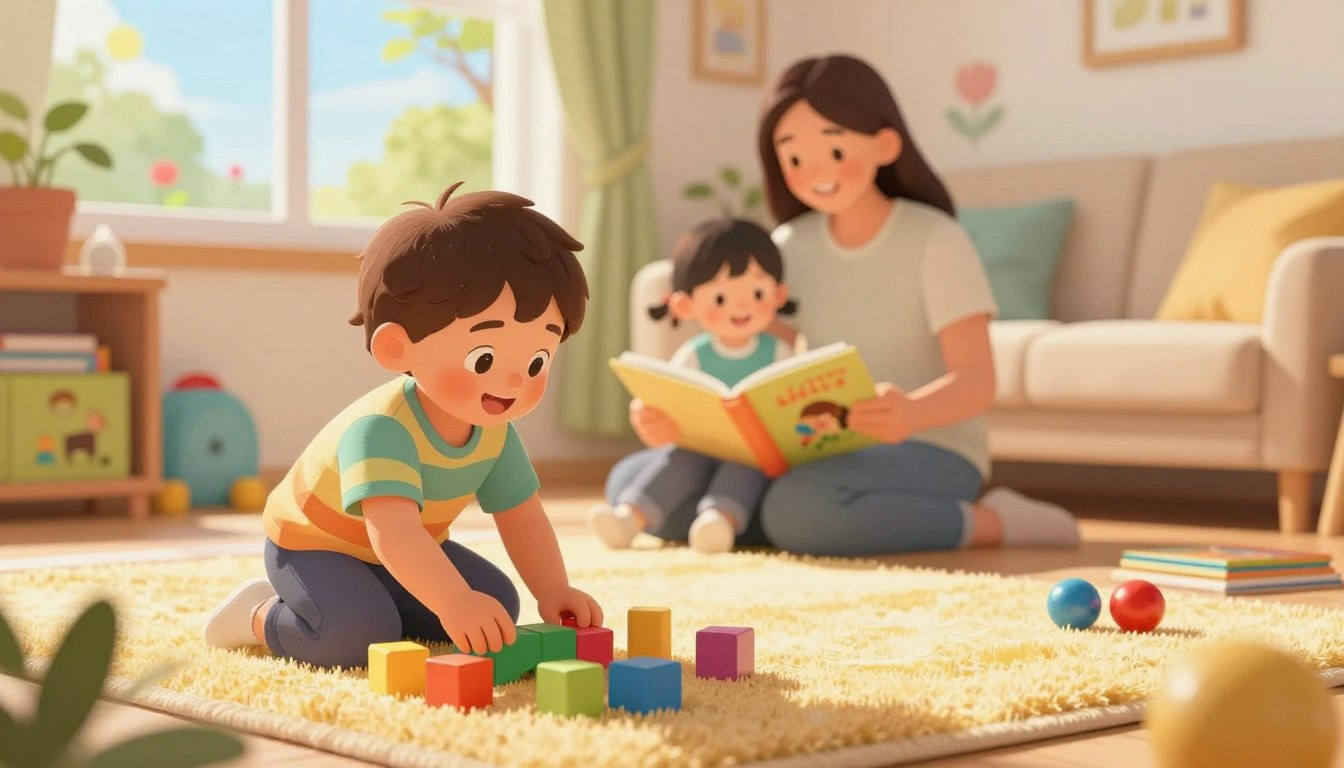
Creating a English daily routine for toddlers helps them learn better. Saying certain words during play or meals helps them learn English well.
Learning to talk is more fun when it’s part of everyday life. We picked 20 important phrases for your daily routine. This makes language development easy and fun.
These short talks make daily moments into valuable teaching chances. Let’s see how these small steps can help your child talk better.
The Importance of Language Exposure in a Toddler Daily Routine

A good toddler daily schedule helps with early English learning. It makes learning feel natural and safe. This way, your child gets used to new words and how to put them together.
Studies show early English helps kids listen and understand better. Talking to your toddler during daily tasks is more than giving orders. It’s building their brain and teaching them to talk and listen.
Using language in daily life makes it fun, not a chore. A steady toddler daily schedule makes your child feel secure. This lets them enjoy learning and talking more.
Here’s how this helps your child grow:
| Developmental Area | Primary Benefit | Long-term Impact |
|---|---|---|
| Listening Skills | Improved focus | Better attention span |
| Comprehension | Faster vocabulary growth | Stronger literacy foundation |
| Social Interaction | Increased confidence | Enhanced emotional intelligence |
| Routine Stability | Reduced daily stress | Improved toddler daily schedule |
Morning Rituals: Starting the Day with English

How you start your day sets the mood for your child’s learning. Adding English to your toddler routine makes language a part of everyday life. Simple sentences help grow your child’s words.
“Language is the road map of a culture. It tells you where its people come from and where they are going.”
Rita Mae Brown
Wake Up and Get Dressed Phrases
Waking up is a great time to learn new words. Use simple, clear commands to guide your child. Saying “Time to wake up” or “Let’s put on your socks” makes getting ready fun.
Being consistent helps build good habits. Using the same phrases every day helps your child learn faster. This is how you make a strong toddler routine.
Breakfast Time Conversations
Breakfast is a good time to talk about colors and tastes. You can say things like “Look, the apple is red” or “The milk is cold.” Engaging your toddler in these talks makes them feel important.
| Activity | English Phrase | Goal |
|---|---|---|
| Waking Up | “Good morning, sunshine!” | Positive start |
| Getting Dressed | “Where is your shirt?” | Vocabulary building |
| Breakfast | “Do you want more milk?” | Decision making |
| Leaving Table | “All done? Let’s go play.” | Routine transition |
Keep your sentences short to keep your child’s attention. Your toddler routine is about more than just tasks. It’s about making learning fun through language.
Mid-Morning Play and Learning for Toddlers

Mid-morning is great for making play a learning for toddlers time. Your child is fresh and ready to learn. They can soak up new things through fun activities.
Adding language to daily activities for toddlers helps them grow. It turns every toy and game into a chance to learn about talking.
Encouraging Exploration and Curiosity
Make learning fun with visual aids. Flashcards and colorful picture books keep your child engaged. They help introduce new words in a fun way.
Pointing to things and naming them connects sight and sound. This makes learning for toddlers an exciting journey, not a task.
Setting Boundaries During Playtime
Play is key, but it’s also a time to teach toddler behavior. Setting gentle rules helps your child learn what’s expected. They can explore safely.
Use short, kind phrases to explain rules. For example, “We keep the blocks on the floor,” or “Let’s share the toy with our friend.”
Being consistent helps manage toddler behavior well. It teaches your child to listen and express needs in a good way.
| Play Type | Language Focus | Goal |
|---|---|---|
| Sensory Play | Descriptive Adjectives | Vocabulary Expansion |
| Building Blocks | Spatial Concepts | Following Instructions |
| Picture Books | Narrative Skills | Curiosity Building |
Lunchtime and Healthy Habits for Toddlers

Talking at the table is key to healthy habits for toddlers. It’s a chance for toddler education to grow. By choosing the right words, you help your child love food.
Promoting Healthy Eating Through Language
Use words like “crunchy” and “yummy” to describe food. Saying “This broccoli is crunchy” makes mealtime fun. It also makes them want to try new foods.
Teach your child the value of food early. Say, “Don’t waste food,” to show meals are important. These lessons help them learn about food for life.
Cleaning Up After Meals
After eating, ask your toddler to help clean up. This makes them feel important. Say, “Let’s put your plate in the sink together,” to show teamwork.
Helping with cleanup teaches them to be responsible. It shows they are part of the family. These healthy habits for toddlers help them grow and learn.
Nap Time and Restful Moments
Creating a calm space for naps helps young children feel safe. This part of your toddler routine is key for their body and mind to grow. A quiet place makes your child feel safe and happy.
Transitioning to Quiet Time
Changing from play to rest needs patience and clear signs. Start by dimming lights or playing soft music. This consistent approach tells your child it’s time to calm down.
Using the same steps every day makes things easier. When you say the same things, your child knows what’s next. This helps them feel calm and secure.
Soothing Phrases for Sleep
By 3–4 years old, kids start making simple sentences. Say things like, “It is time to rest your body now,” or “Let’s close our eyes and have sweet dreams.” These words make them feel safe.
Consistent communication during quiet times helps your child listen and understand. Even if they don’t talk back, they learn from your voice. Soft speaking shows rest is a peaceful and positive thing.
Afternoon Activities and Outdoor Play
Afternoons are great for going outside and learning new words. Playing outside helps toddlers connect words with the world. It’s a fun change from staying inside.
Describing the World Outside
Outside, use words to help your toddler see their world. Say “look at the bright blue sky” or “feel the soft green grass.” This helps them learn colors.
Ask your child to use their senses. Say, “Do you hear the birds singing?” or “Feel the warm sun?” These questions make learning fun.
Social Interaction and Sharing
Outdoor places are perfect for learning to share. Say “Let’s play outside” to start. When your child meets others, teach them to ask to join in.
These small steps help your child feel confident and kind. By practicing, they learn to get along with others easily.
| Phrase | Context | Developmental Benefit |
|---|---|---|
| “Let’s play outside” | Transitioning to the park | Understanding routines |
| “Can I join you?” | Meeting new friends | Social cooperation |
| “Look at the big tree” | Nature exploration | Vocabulary expansion |
| “Let’s take turns” | Sharing equipment | Patience and empathy |
Bath Time and Hygiene Routines
Make bath time a special moment. It’s a chance to teach your child about cleanliness. These moments help build good habits for life.
Making Self-Care Fun
Make bath time fun to avoid fights. Use simple words to guide your child. Saying “Wash your hands” helps them understand.
Here are ways to make it fun:
- Sing a song while washing to make time go fast.
- Use colorful washcloths or toys to keep them busy.
- Praise them for washing themselves to encourage independence.
Safety and Comfort in the Bathroom
A safe bathroom is key. Your calm voice makes it a safe place. This helps your child feel at ease.
Check the water is not too hot before they get in. Keep the floor dry and use a non-slip mat. This keeps them safe and builds good habits.
Dinner Time and Family Connection
Making dinner a team effort makes your toddler feel important. This time is great for seeing positive toddler behavior and feeling part of the family. It turns dinner into a special time for everyone to grow together.
Engaging Toddlers in Meal Preparation
Letting your child help in the kitchen is good for their skills. They can wash veggies or mix things in a bowl. It makes them feel capable and proud of what they do.
As you work together, talk about what you’re doing. This helps them learn new words and stay focused. Helping out makes them less likely to act out because they feel needed.
Expressing Gratitude and Daily Reflections
The dinner table is perfect for saying thanks and sharing the day’s best moments. Asking your child to share something they liked helps them stay positive. Start by telling them about your favorite part of the day.
Simple thanks, like “I’m glad we’re eating together,” make dinner warm and friendly. These moments strengthen the parent-child bond and give them a safe feeling. Talking about the day helps them calm down and think about their experiences.
Bedtime Routines and Evening Calm
Creating a peaceful evening is key for toddler care. A predictable routine makes your child feel safe and ready for sleep. These moments are great for practicing language skills from the day.
Reading and Storytelling Phrases
Reading books together signals the end of the day. Use simple phrases like, “Let’s pick a story,” or “What happens next in our book?” to keep them interested.
As you read, point to pictures and ask, “Where is the little bear?”. This builds vocabulary and keeps things calm. Consistent storytelling helps the brain get ready for sleep.
Saying Goodnight and Providing Security
How you end the day affects your child’s security. It’s best to say goodnight before bed in a warm tone. Use phrases like, “It is time to rest your eyes,” or “Goodnight, my sweet child,” to comfort them.
You can also say, “I am right here if you need me,” to reassure them. This routine gives them the stability they need. Quality toddler care is about these small, loving moments at the end of the day.
Mastering the English Daily Routine for Toddlers
Being consistent helps your child learn English better. A steady english daily routine for toddlers is key for their growth. Saying the same words every day makes your child feel more confident.
Consistency as a Tool for Development
Using the same words for things like bath time helps your child learn to speak. This makes learning easier and fun. It’s a great way to help your child grow.
Your child feels more at ease when they know what’s coming. This makes them want to talk more like you. Over time, they build a strong base for talking.
Adapting Phrases to Your Child’s Growth
As your child gets older, they need more challenging words. Start with simple words and move to longer sentences. This keeps learning fun and effective.
Watching how your child grows helps you know when to add new words. Here’s how you can change your words as your child grows.
| Development Stage | Language Focus | Example Phrase |
|---|---|---|
| Early Toddler | Basic Nouns/Verbs | “Eat apple.” |
| Mid Toddler | Simple Sentences | “Do you want an apple?” |
| Advanced Toddler | Descriptive Language | “Let’s eat this crunchy red apple.” |
Learning English is a long journey. Be flexible and listen to your child’s needs. This way, your talks will always be important and helpful.
Conclusion
Using these phrases every day helps your child grow. Talking often is key for learning at home. Every word you say helps your child see the world.
Make everyday moments teachable. This way, your child learns and feels safe with you. They learn new words and feel happy with you.
Begin with a few phrases that feel right. Watch how your child reacts to your words. As you keep talking, their words will grow.
Talk about your favorite phrases with other parents. Sharing ideas helps everyone teach better. Your effort now will help your child succeed in school.
FAQ
Q: How does a consistent toddler daily schedule help with language learning?
A: A daily schedule helps kids learn English by making it predictable. They learn to connect words with actions. This makes learning fun and easy.
Q: What are the best activities for toddlers to practice English outdoors?
A: Outdoor play is great for learning English. Activities like playing in a Little Tikes garden or at the park are perfect. Kids learn action words like “run fast” and “climb up” while playing.
Q: How can I manage toddler behavior using English phrases?
A: Use simple commands to manage behavior. Say “Gentle hands” or “Please wait” instead of long talks. This helps kids understand what’s expected of them.
Q: Why is healthy habits for toddlers an important part of language education?
A: Teaching healthy habits through language helps kids understand why they’re important. Saying “Eat your broccoli to grow strong” teaches them about self-care.
Q: What role does toddler care play in cognitive development?
A: Toddler care is all about talking and listening. Caregivers talk about what they’re doing, like putting on Pampers. This helps kids learn and grow.
Q: At what age should I start an english daily routine for toddlers?
A: Start early, even in infancy. But kids really soak up language between 1 and 3 years old. Early start helps build strong language skills.