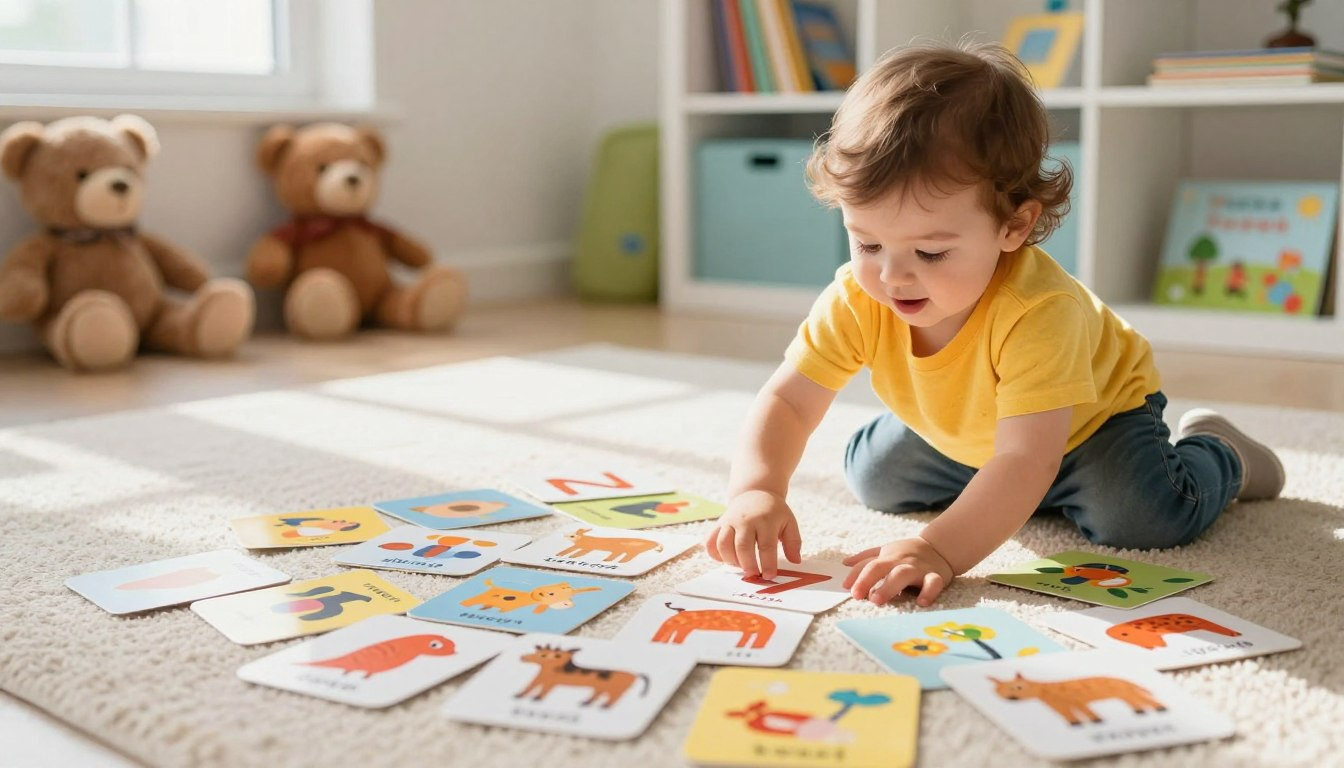
Did you know a young child’s brain forms one million neural connections every second? This is why early years are key to learning language with educational tools.
Parents often start with alphabet squares. They hold up a card and watch as their child repeats the word with genuine delight.
But then, the child might start squirming or look at the ceiling fan. Most parents feel frustrated when their plans don’t work.
It’s normal to feel down when a child picks a spinning fan over a bright card. Using english flashcards for toddlers well means more than just repeating words. It keeps their attention.
Turning lessons into games makes learning fun and exciting. These toddler learning cards make learning a fun, bonding experience that keeps boredom away.
Why Flashcards Work Wonders for Toddler Language Development
Science shows that flashcards help young kids learn. They help kids see letters and hear sounds. This makes learning fun and exciting for toddlers.
The Science Behind Visual Learning in Early Childhood
Young kids learn best by seeing things. Flashcards use pictures to help kids connect words with meanings. This is key for learning to read later on.
Studies say that preschool flashcards really help kids learn. They make learning fun and easy for everyone.
Building Vocabulary Through Repetition and Recognition
Flashcards help kids learn new words by seeing them often. By seeing vocabulary cards for toddlers many times, kids remember new words better. This makes it easier for them to use these words.
Flashcards also make learning fun. Kids play games with them to learn more about language.
Benefits Beyond Language Acquisition
Flashcards do more than just teach words. They also help kids remember things better and focus more. They make learning fun and exciting.
Flashcards can be used in many ways. They help all kinds of kids learn in their own way.
Choosing the Right English Flashcards for Toddlers
Finding the best flashcards for toddlers starts with knowing their needs. Toddlers learn fast, so their tools must keep up.
Age-Appropriate Content for Different Developmental Stages
Flashcards should match the child’s age for the best results. Here’s what to look for at different ages:
Best Topics for 12-18 Month Olds
Young toddlers like simple things. Pictures of family, animals, and toys are great. These cards help them learn words and recognize things.
Expanding Vocabulary for 18-24 Month Olds
As toddlers get older, they learn more words. Include pictures of cars, clothes, and home items. This stage is for learning actions and verbs.
Advanced Concepts for 2-3 Year Olds
Older toddlers can learn harder things. Shapes, colors, and counting are good topics. They can also learn to sort things.
Essential Quality Features
Quality matters as much as what’s on the cards. Here are important features:
Durability and Safety Standards
Flashcards must be tough and safe. They should be made from non-toxic materials. They should also have no sharp edges.
Image Clarity and Visual Appeal
Clear images are key. Pictures should be simple and big. Using realistic images helps toddlers connect with the real world.
Parents can find many free options online. Searching for “alphabet flash cards online free” can help. Many sites offer customizable flashcards.
Choose flashcards with clear designs and simple pictures. Some have touch options, which make learning fun by using more senses.
- Look for flashcards with simple, clear images.
- Consider the durability and safety of the materials used.
- Opt for cards that offer a range of topics suitable for your child’s age and developmental stage.
Making Flashcard Time an Active Play Experience
Make flashcard time fun by adding movement. This makes learning with toddler learning cards more fun and helpful.
Movement-Based Learning Activities
Using educational flashcards for kids in fun ways keeps toddlers active. These activities help with both body and brain growth. For example, set up an obstacle course. Kids can jump, crawl, or walk while saying the words on the preschool flashcards.
Here are some fun ideas:
- Jumping jacks while saying the word on the flashcard
- Marching in place when showing action words like “run” or “walk
- Clapping hands for words that start with a specific sound
Jump, Clap, and Dance with Vocabulary
Mixing vocabulary with fun movements like jumping and dancing makes learning fun. For example, when showing a flashcard with “cat,” the child can meow and jump like a cat. This way, they learn better.
Here are some fun ways to start:
- Use flashcards with action verbs and have the child act them out.
- Create a “dance party” where each flashcard triggers a different dance move.
- Play a “freeze dance” game where children dance and freeze when a specific word is shown.
Action Cards That Get Toddlers Moving
Make educational flashcards for kids with action words to get them moving. Words like “run,” “jump,” “hop,” or “skip” are great. Acting out these words helps kids learn and grow physically.
- Use them in a sequence to tell a simple story that requires the child to act out different actions.
- Mix action cards with other vocabulary cards to keep the activities varied and interesting.
- Encourage children to create their own action cards and act out the words.
Transform Flashcards Into Exciting Games

Parents can turn flashcards into fun games for toddlers. This makes learning fun and helps with words. It keeps toddlers interested and eager to learn.
Hide and Seek Vocabulary Adventures
Hide and seek is great for learning words. Hide flashcards around the house. When found, say the word on the card.
This game helps with words and keeps kids active. For example, hide a ball card and say “Where’s the ball?” The child finds it, learning the word “ball.”
Memory Matching Challenges
Memory games boost memory and focus. Make pairs of flashcards and lay them out. The child finds the matches by flipping two cards at once.
This game sharpens thinking and helps with word recognition. For example, finding a cat card and a “cat” card teaches the word.
Sorting and Categorizing Fun
Sorting games teach about different things. Make categories like animals, food, and toys. Have the child sort flashcards into these groups.
| Category | Example Flashcards |
|---|---|
| Animals | Cat, Dog, Elephant |
| Food | Apple, Banana, Carrot |
| Toys | Ball, Doll, Blocks |
Flashcard Scavenger Hunts Around the House
Scavenger hunts make learning fun and active. Create a list of items for the flashcards. Have the child find these items around the house.
For example, if there’s a book card, find a book. This connects words to real things, helping to remember them.
By adding games to flashcard time, learning becomes fun for toddlers. Be creative and match activities to the child’s likes and age.
Using Storytelling to Bring Cards to Life

Toddlers can learn English in a fun way with stories. Parents and teachers can make learning exciting with stories.
Creating Simple Narratives with Multiple Cards
Flashcards can tell simple stories. For example, cards of a cat, a ball, and a garden tell a story. It’s about a cat playing with a ball in the garden.
Encouraging Toddlers to Tell Their Own Stories
Letting toddlers make their own stories is great. Parents can start with a few cards. Then ask the child to tell their story.
Building Story Sequences
Building stories with flashcards is fun. It helps kids think and learn words. For example, cards for morning, afternoon, and evening tell a daily routine story.
| Card 1 | Card 2 | Card 3 |
|---|---|---|
| Morning | Breakfast | Playing |
Storytelling makes learning fun for toddlers. It helps them learn words and think creatively.
Multi-Sensory Approaches That Engage All the Senses
Toddlers learn best when they use all their senses. This makes learning fun and effective. Parents and teachers can make learning better by adding different sensory experiences.
Using educational flashcards for kids is a great way to teach new words and ideas. But, it’s better to use more than one sense at a time. There are many ways to do this.
Adding Touch and Texture Elements
Adding different textures to flashcards makes learning more fun. For example, tracing letters in sand or making shapes with play-dough helps kids remember better.
Incorporating Sounds, Songs, and Rhymes
Adding sounds and songs to flashcards makes them more fun and easy to remember. Singing songs or reciting rhymes about the words on the cards helps kids remember them better.
| Activity | Description | Benefits |
|---|---|---|
| Tracing Letters in Sand | Trace letters or shapes in sand or rice | Develops fine motor skills, reinforces letter recognition |
| Play-Dough Creations | Form letters or shapes using play-dough | Enhances tactile experience, improves hand-eye coordination |
| Sound Association | Associate sounds or songs with flashcards | Improves auditory memory, enhances vocabulary retention |
Pairing Flashcards with Real Objects
Linking preschool flashcards to real things helps kids see how they are used. For example, showing a card with “apple” and then giving them an apple makes a big impression.
Using Scents for Memorable Associations
Adding smells to learning makes it stick in their memory. Using scented flashcards or linking smells to words helps kids remember better.
By using these multi-sensory methods, learning becomes more fun and effective for toddlers. This makes interactive learning cards a great tool for early learning.
Keeping Sessions Short and Toddler-Friendly

Flashcards are great for learning new words. But, they must fit a toddler’s short attention span. Toddlers are curious but can’t focus for long.
Understanding Realistic Attention Spans by Age
How long a toddler can pay attention changes with age. Younger kids have shorter attention. For example, a 2-year-old might stay focused for 2-3 minutes. A 3-year-old can last up to 5 minutes.
Attention Span Guidelines by Age:
| Age | Typical Attention Span |
|---|---|
| 1-2 years | 1-2 minutes |
| 2-3 years | 2-3 minutes |
| 3-4 years | 3-5 minutes |
Optimal Session Length and Daily Frequency
Keep sessions short, 3-5 minutes, to keep them fun. If a toddler loses interest, stop. Forcing them to learn can make them dislike it.
Daily Frequency: Short sessions all day are better than one long one.
Reading the Signs When It’s Time to Stop
Know when a toddler is done. Look for signs like fussing or looking away. When you see these, it’s time to stop.
Short, fun sessions help kids love learning. They help build vocabulary too.
Rotating Themes to Keep Learning Fresh and Exciting
To keep English flashcard learning fun for toddlers, change the themes often. This keeps them interested and teaches new words and ideas.
Variety is key for keeping toddlers interested. Switching the theme of flashcard activities often stops boredom. It makes learning fun.
Weekly Theme Planning Ideas
Plan weekly themes for flashcards. For example, one week could be about animals. The next week, it could be about food.
Some weekly theme ideas are:
- Transportation (cars, buses, trains, bicycles)
- Family members (mom, dad, brother, sister)
- Seasons (winter, spring, summer, autumn)
Connecting Vocabulary to Daily Routines and Experiences
Make learning relevant by linking it to daily life. Use flashcards of bath toys or water during bath time. Use food flashcards during meals.
This makes learning meaningful. Toddlers see how words relate to their lives.
Seasonal and Holiday-Themed Cards
Use seasonal and holiday flashcards to keep learning exciting. For Christmas, use cards with trees, Santa Claus, or reindeer. For Halloween, use cards with pumpkins, ghosts, or witches.
These cards make learning fun. They also help toddlers understand cultural celebrations.
Combining Digital and Physical Flashcard Resources

Using both educational flashcards for kids and interactive learning cards on devices is smart. It makes learning fun and complete for toddlers. Parents can mix old-school cards with new tech for a great learning mix.
Looking for alphabet flash cards online free is easy. You’ll find many to print and use on devices. This mix lets you adjust learning to fit your child’s needs and likes.
When Digital Flashcard Apps Can Help
Digital apps with interactive learning cards are great for toddlers. They have fun stuff like animations and games. Apps that let you make your own preschool flashcards are super for focusing on specific learning areas.
Maintaining Balance Between Screen and Hands-On Learning
It’s key to balance screen time with hands-on activities. Toddlers learn a lot by touching and exploring. Educational flashcards for kids are great for this. Parents should find a good mix that uses tech wisely.
Best Practices for Technology Integration
Parents should pick apps that fit their child’s age and needs. They should also limit screen time. And, they should join in on digital learning to bond and help learning stick.
By mixing physical and digital preschool flashcards, parents can make learning rich and varied. This supports their toddler’s learning journey well.
Creating a Positive and Pressure-Free Learning Environment
Toddlers love to learn when it feels like play. Using English flashcards for toddlers should be fun. It’s important to make the learning space positive and free from stress.
Effective Praise and Encouragement Techniques are key. Praise their efforts, not just their wins. Saying “I love how you’re trying to say that word!” is better than just “Good job!” This builds confidence and a growth mindset.
Effective Praise and Encouragement Techniques
To praise toddlers well, focus on their hard work and progress. Here’s how:
- Give specific praise like “You’re doing a great job sounding out that word!”
- Show excitement when they learn something new
- Use hugs or high-fives to show you’re proud
Making Mistakes Part of the Learning Journey
Mistakes are a big part of learning. Toddlers learn more when they feel safe trying new things. Parents should be patient and understanding, not critical.
If a toddler gets a word wrong, say it right and ask them to try again. This shows them mistakes help them grow.
Following Your Toddler’s Natural Interests and Pace
Every toddler learns differently and at their own speed. Letting them lead makes learning fun and engaging. If they love animals, use animal flashcards to make it exciting.
Keep lessons short and stop when they lose interest. This way, learning stays positive and fun. “Follow Your Child’s Lead: Keep sessions short. If they lose interest, stop. Forced learning creates negative associations.”
Avoiding Common Flashcard Pitfalls
Using english flashcards for toddlers can be tricky. They can help with learning, but can also cause frustration if not used right.
To make the most of preschool flashcards, parents need to watch out for some common mistakes. Knowing these can help make learning fun and positive for toddlers.
Pushing Too Hard or Setting Unrealistic Expectations
One big mistake is pushing toddlers too hard or expecting too much. Remember, every child learns at their own pace. Some might need more time to learn new things.
Don’t expect your toddler to learn a new word or concept overnight. Make learning fun and engaging. This way, your child will love learning and won’t get frustrated.
Turning Flashcards Into Tests Instead of Play
Another mistake is making flashcard sessions feel like tests or quizzes. This can stress out your toddler and make them less excited about learning. Instead, use flashcards as a fun game or activity to enjoy together.
For example, you can use flashcards to create a simple matching game or a scavenger hunt around the house. This makes learning new words fun and relaxed for your child.
Ignoring Signs of Boredom or Frustration
It’s important to listen to your toddler’s feelings during flashcard sessions. If they seem bored or upset, it’s time to change things or take a break.
| Signs of Boredom or Frustration | Possible Solutions |
|---|---|
| Loss of interest or attention | Change the activity or take a break |
| Fussing or becoming upset | Slow down the pace or simplify the activity |
| Refusing to participate | Try a different approach or come back to it later |
Using Too Many Cards at Once
When introducing new vocabulary cards, start small. Begin with 3-5 cards and add more as your child gets more confident.
For a toddler, 3-5 cards are plenty to begin with. This helps avoid feeling overwhelmed and lets your child focus on a few new words at a time. As they get more comfortable, you can add more cards.
Conclusion
Learning to read early is about how kids’ brains work, not just using flashcards. Parents and caregivers can make learning fun by using the right methods. Interactive cards can really help in this way.
Flashcards should be fun and engaging for kids. Adding movement and stories to flashcard activities makes learning exciting. This helps kids love learning without feeling stressed.
The main goal is to make learning fun for young kids. Using interactive cards and other resources in a fun way helps kids do well in school later on.
FAQ
How can I keep my child from getting bored with English flashcards for toddlers?
Make it fun by adding games and stories. Use the cards in fun ways, like playing games. Keep it short to keep them excited to learn more.
Why are visual learning aids so effective for a toddler’s language development?
Toddlers learn images faster than words. Visual aids help them connect sounds to pictures. This helps them learn and name things faster.
What features should I look for when purchasing educational flashcards for kids?
Choose durable cards that can withstand little hands. Look for thick, laminated cards from trusted brands. They should have clear, simple pictures.
Can movement-based activities really help a child learn with language development tools?
Yes! Moving around while learning makes it stick better. It’s fun and keeps them active.
How do I turn preschool flashcards into a game of Hide and Seek?
Hide cards around the room. When they find one, they say the word. It’s like a fun treasure hunt.
Is it beneficial to use storytelling with interactive learning cards?
Yes! Stories help them understand words in context. It’s a great way to boost their confidence and creativity.
How can I incorporate a multi-sensory approach with educational flashcards for kids?
Use real objects with the cards. For example, if it’s a flower card, let them smell a real flower. It makes learning more fun and real.
What is the ideal session length for using toddler learning cards?
Toddlers focus best in short periods, three to eight minutes. Break learning into short sessions to keep them interested.
How can digital apps like Khan Academy Kids complement physical english flashcards for toddlers?
Apps add sounds and animations. But, mix them with physical cards for a balanced learning experience. Hands-on play is key for young children.
What are the most common mistakes to avoid when using language development tools?
Don’t make it a test. Use a “show me” approach and keep it simple. Use a few cards at a time to avoid feeling overwhelmed.