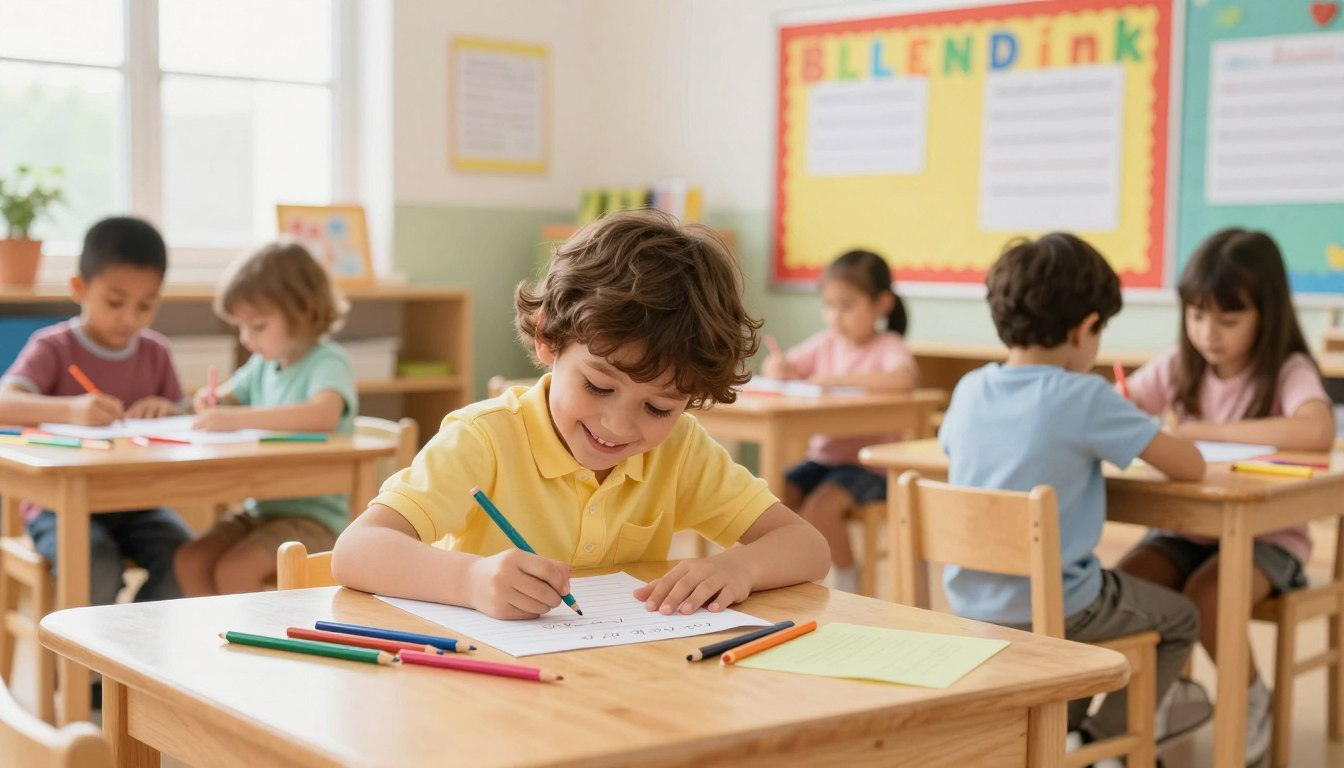
Have you ever wondered why writing feels hard for a five-year-old? It seems easy to us, but sentence construction is tough. Kids have to learn letters, sounds, and grammar rules all at once.
Teaching early reading is very challenging. Kids get frustrated trying to do too much. Patience is your greatest tool when starting.
Using clear, step-by-step teaching can make it easier. Good Kindergarten writing practice helps kids feel more confident. With the right help, they can build a strong writing foundation for life.
Foundations of Early Literacy Development

Early literacy starts long before a child holds a pen. It mixes brain growth with hand skills. Knowing these steps helps you support your child for school.
Understanding Writing Readiness
Writing readiness is more than just learning letters. It’s about following things with your eyes and knowing symbols mean sounds. These pre-writing skills are key for school success.
Watch how your child acts with books and crayons. When they start tracing or copying letters, they’re showing they’re ready. This is a big step in their early literacy development.
The Role of Fine Motor Skills in Penmanship
Being able to control your body is also important. Fine motor skills help a child hold a pencil right and move it smoothly. Without these skills, writing can be hard, not fun.
Do simple fine motor skills activities every day to make hands stronger. Using tweezers, playing with clay, or threading beads helps. These activities help hands get ready for writing.
Working on these pre-writing skills makes starting school easier. By doing fine motor skills activities, your child will feel more confident writing.
Essential Tools for Kindergarten Writing Practice

Getting the right writing tools for your child is key. It helps minimize hand fatigue and makes learning fun. These tools are important for pre-writing skills in early learning.
Selecting the Right Pencils and Grips
Young kids often find regular pencils hard to use. Look for thick, triangular-shaped pencils for them. These pencils are easier for small hands to hold.
For extra help, add an ergonomic rubber grip to the pencil. It makes holding the pencil softer and less tiring. This lets your child focus on writing better.
Choosing Appropriate Paper and Worksheets
The paper matters a lot too. Use paper with wide-ruled lines or special primary paper. It helps kids see where to place letters.
Choose penmanship worksheets that fit your child’s level. Avoid too hard materials. Look for ones with lots of space and big examples.
| Tool Type | Best For | Key Benefit |
|---|---|---|
| Triangular Pencils | Beginners | Improves natural grip |
| Rubber Grips | Hand Fatigue | Increases comfort |
| Primary Paper | Letter Sizing | Provides visual boundaries |
| Tracing Worksheets | Stroke Order | Builds muscle memory |
Choosing the right supplies helps your child do well. Using good penmanship worksheets and tools helps with pre-writing skills. This is important for school success.
Mastering Pencil Grip and Control

Teaching your child to hold a pencil right is key for their writing future. Getting a good grip is a big step that needs patience and pencil grip practice. When kids hold pencils right, they can write longer without getting tired or upset.
Techniques for Proper Finger Placement
The best way to hold a pencil is the dynamic tripod grip. Here, the pencil sits on the side of the middle finger. The thumb and index finger keep it steady. Teaching this early stops bad habits from forming later.
“The development of fine motor control is the silent engine behind every successful writer.”
Use small crayons or special grips to help your child’s fingers find the right spot. These tools give feedback on finger placement. Using them makes handwriting exercises fun and helpful for kids.
Exercises to Build Hand Strength
Strong hands are key for smooth writing. Doing fine motor skills activities every day helps build writing strength. Simple tasks at home can greatly improve their dexterity.
| Activity Type | Primary Benefit | Recommended Frequency |
|---|---|---|
| Playdough Squeezing | Finger Strength | Daily |
| Tweezer Sorting | Pincer Grasp | 3 times weekly |
| Bead Threading | Hand-Eye Coordination | Weekly |
Add these fine motor skills activities to your daily routine. By focusing on handwriting exercises, your child will get the strength needed for school. Every small improvement in grip means more confidence in writing.
Letter Formation Practice and Tracing

Letter formation practice is key for future success. Kids learn to write letters in a special way. This helps them write smoothly.
Teaching Proper Stroke Order
Every letter has its own path. Teaching the right order helps avoid bad habits. Consistency is very important.
Show your child how to move the pencil. Use big, clear movements to guide them. This helps them write better.
Using Tracing Worksheets Effectively
Keep tracing sessions short and fun. Practice for a few minutes each day. This keeps it enjoyable for your child.
Good penmanship worksheets help guide small hands. Look for ones with lots of space and clear starts. Encouragement is key, so celebrate every small step.
Transitioning from Letters to Simple Words

Helping your child write their first words is a big step. It makes writing a way to share thoughts, not just a task.
Use 5-10 minute lessons to help. These short lessons keep kids focused and not too stressed.
Phonetic Spelling and Sight Word Integration
Start with simple, three-letter words. This phonetic approach links sounds to letters they know.
When they get the hang of sounds, add common sight words. Words like “the,” “and,” or “is” help them build sentences and read better.
Building Confidence Through Short Words
Success motivates young learners. Focus on short words like “cat,” “dog,” or “sun.” This makes them feel capable and successful every time.
Celebrate their small wins. Seeing they can write their thoughts boosts their confidence. This helps them tackle harder tasks in early literacy development.
Strategies for Teaching Sentence Structure
When your child knows words, they can start making simple sentences. This is a big step in learning to read and write. By taking small steps, you help them feel sure about writing complete thoughts.
Constructing Two and Three Word Sentences
Begin with simple sentences like “Dogs run” or “Cats jump.” These two-word combinations are easy to start with. Teach them to always start with a capital letter and end with a period.
When they get better, add a third word. For example, “The dog runs.” This shows how words come together. Consistency is key here, so use simple words they know well.
Using Visual Aids to Organize Thoughts
Visual aids help your child before they write. Use color-coded cards for different parts of speech. This tactile approach lets them arrange ideas on the table.
Graphic organizers or simple boxes on a page also work well. Drawing a box for each word helps them see the sentence’s structure. This makes writing easier and helps them work on their own.
Mastering Spacing Tips for Legible Writing
Teaching your child to space out their writing is very important. When they start writing, they often forget to leave space between words. This makes their sentences look like one long line.
It’s as important as practicing their pencil grip. By teaching them to use white space, you help them learn discipline. Clear writing boosts their confidence and makes reading easy for others.
The Finger Space Technique
The best way to teach spacing is the finger space technique. Tell your child to put their index finger on the paper after a word. Then, they should start the next word right after their finger.
This trick helps them see the need for a small gap. It makes spacing something they can do every time they write.
“Writing is the painting of the voice,” as the saying goes, and clear spacing ensures that the message remains beautiful and easy to understand.
Using Spacers and Physical Guides
If your child finds it hard to keep their finger steady, try using tools. Small objects like craft sticks or popsicle sticks are great. They make it easier for small hands to manage.
These tools help them practice their pencil grip without worrying about spacing. As they get better, they won’t need the tools anymore.
| Method | Best For | Primary Benefit |
|---|---|---|
| Finger Space | Beginners | Always available |
| Craft Stick | Visual Learners | Consistent width |
| Spacer Stamp | Advanced Practice | Fun engagement |
By using these simple methods, your child’s writing will stay neat and easy to read. Remember, patience is key as they learn these skills. With your help, they’ll soon get the hang of it.
Common Challenges in Early Writing
It’s normal for kids to struggle with early writing skills. They might find some tasks hard. But these moments are just part of learning.
By matching your expectations with their writing readiness, you can make these challenges into learning chances.
Addressing Letter Reversals
Many kids write letters like “b” and “d” or “p” and “q” the wrong way early on. This is a normal part of letter formation practice. It doesn’t mean they have a learning problem.
Instead of correcting them hard, playfully show them the letter’s shape. Use tools like sand trays or playdough to help them feel the shapes.
Consistency is key, but keep it fun and encouraging. If they keep reversing letters, show them the right way without making them feel bad.
Managing Frustration and Building Stamina
Writing is hard for young kids. If they get upset or tired, they need a break. Short, frequent sessions work better than long ones.
Building stamina takes time. Celebrate small wins to keep their spirits up. When they get tired, switch to something else to keep their focus.
Stay positive to make writing fun for them.
| Challenge | Common Cause | Supportive Strategy |
|---|---|---|
| Letter Reversals | Developing spatial awareness | Use tactile tracing methods |
| Hand Fatigue | Underdeveloped motor muscles | Shorten practice sessions |
| Task Avoidance | Lack of writing readiness | Incorporate fun, low-pressure games |
Fun Activities to Encourage Daily Writing
Make daily writing fun for your child. Turn it into an adventure they can’t wait for. By making it playful, you help them love reading and writing more.
When it’s fun, they’ll want to do it every day. This makes learning easier and more enjoyable.
Creative Journaling for Kindergarteners
Let your child’s creativity shine through journaling. Ask them to draw and write about their favorite things. This makes writing feel special and connected to their life.
“Play is the highest form of research.”
Albert Einstein
When kids write about things they love, they focus better. Try asking, “What’s your favorite animal?” This makes writing a fun way to express themselves.
Writing Games and Interactive Exercises
Games make learning fun and not tiring. Try unscrambling sentences to teach word order. This turns writing into a fun game.
Make tracing letters fun with sand trays or shaving cream. This hands-on method helps them remember letters better. It keeps learning fun and exciting.
Conclusion
Learning to write early is a slow but fun journey. It needs both teaching and making it fun. You can help your child grow by making practice fun.
Teaching grip, letter shape, and spacing is key. Little steps add up over time. Keep lessons short and fun to boost confidence.
Every time your child writes, they get better. Celebrate their small wins to keep them excited. Your patience and help are the most important.
You can help your child become a great writer. Begin with a short, enjoyable writing activity today. Your help is what makes a big difference.
FAQ
Q: Understanding Writing Readiness
A: Before a child starts writing, they must reach certain goals. They need to know that symbols mean sounds and ideas. By reading together and playing with letters, you help them get ready to write.
Q: The Role of Fine Motor Skills in Penmanship
A: Writing well depends on being able to move small muscles. Playing with Play-Doh or using scissors helps. These activities make it easier for kids to hold a pencil and write well.
Q: Selecting the Right Pencils and Grips
A: The tools you choose are very important. A special pencil helps kids hold it right. If their hands get tired, tools like The Pencil Grip can help.
Q: Choosing Appropriate Paper and Worksheets
A: Not all paper is good for young writers. Use big paper with wide lines to help them see where letters go. Good worksheets help keep letters the same size.
Q: Techniques for Proper Finger Placement
A: Teaching kids to hold a pencil right is key. They should pinch the pencil with their thumb and index finger. This helps them move the pencil with their fingers, not their whole arm.
Q: Exercises to Build Hand Strength
A: If your child presses too hard or too light, they might need stronger hands. Activities like picking up small things with tweezers help. These exercises are important for writing clearly.