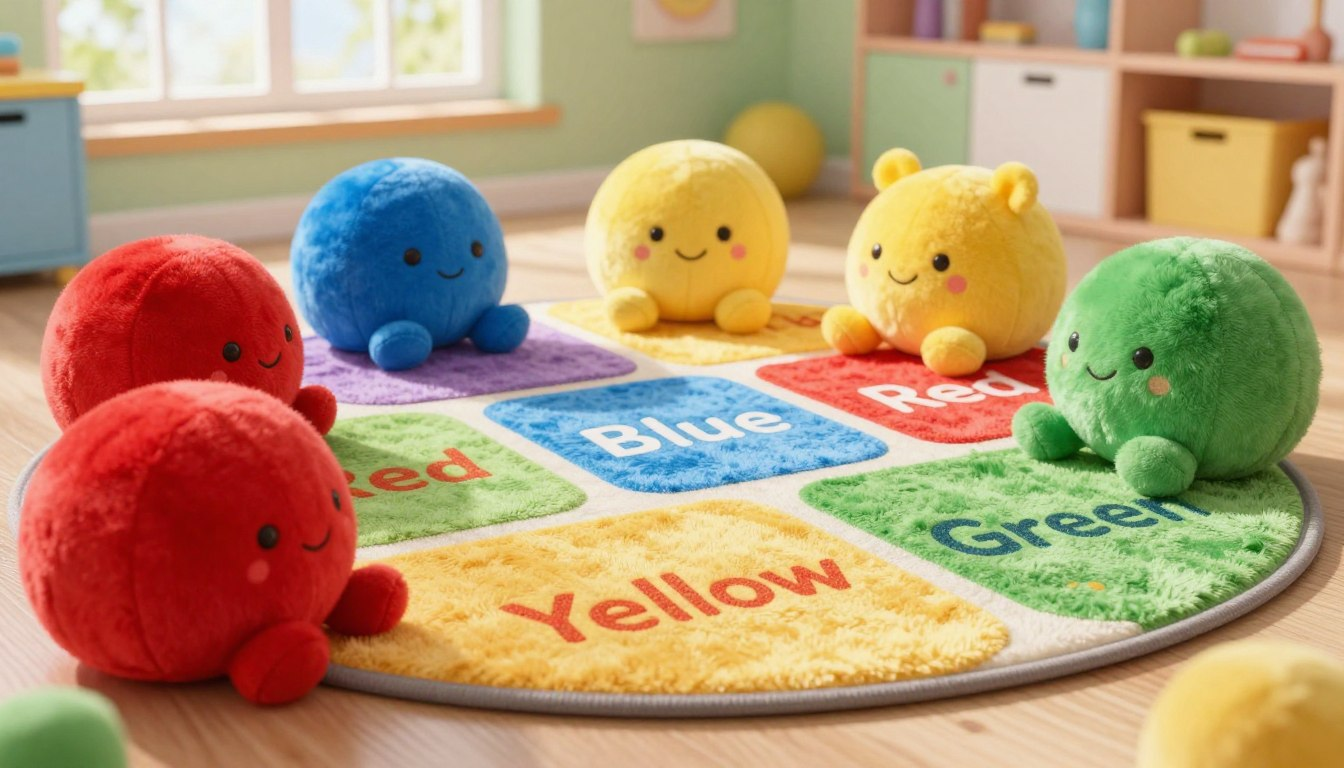
Teaching english colors for toddlers doesn’t need fancy tools or hard plans. You can make your day fun and full of learning.
Simple fun color learning games help your child learn language and see colors better. These games make everyday moments fun and educational.
Exploring nature helps your child love learning more. Let’s see how you can make learning part of your daily life. This will help your child grow and succeed.
The Importance of Early Color Recognition

Exploring the rainbow is fun and important for your toddler. Newborns see in black and white. But your child is ready for bright colors.
Learning toddler color recognition helps them understand their world. It’s like a key to unlock new sights and sounds.
Why Colors Are a Foundational Concept
Colors are the first steps in learning to see the world. When you teach english colors for toddlers, you help them see things in groups. This makes it easier to tell things apart.
When your child says a banana is yellow, they’re learning. They start to see the world in a new way. This helps them talk about what they see more clearly.
Here’s how learning colors grows as your child gets older:
| Developmental Stage | Visual Focus | Color Capability |
|---|---|---|
| Newborn | High-contrast patterns | Limited perception |
| 6-12 Months | Primary colors | Basic discrimination |
| 24 Months | Vibrant spectrum | Naming and sorting |
Cognitive Benefits of Learning English Colors for Toddlers
Learning colors does more than just add words to their vocabulary. It makes their brain work better. When they sort blocks by color, they’re learning to group things.
This helps their attention spans and makes their brain stronger. As they learn new colors, their brain gets better at making connections. This makes them feel proud and ready for more challenges.
Essential English Color Vocabulary for Preschoolers

You can help your toddler learn colors by starting with the brightest ones. Learning english colors for toddlers in a fun way is key. It makes learning colors exciting, not boring.
Primary Colors: Red, Blue, and Yellow
Learning colors starts with the primary colors. These colors are easy for little eyes to see. Point out a red apple, a blue sky, or a yellow banana every day.
Being consistent helps a lot. Labeling things clearly helps your child connect words with pictures. Repetition makes these words stick in their mind.
Secondary Colors: Green, Orange, and Purple
When your child knows the primary colors, it’s time for secondary colors. These colors are found in nature, perfect for preschool color lessons. Talk about green grass, orange pumpkins, or purple flowers.
Secondary colors are made by mixing two primary colors. Show how blue and yellow make green. This hands-on approach makes learning fun and real.
Neutral Tones: Black, White, and Brown
Neutral colors are the last step in teaching colors. These colors are not as bright but are important. Find them in things like white milk, brown teddy bears, or black shoes.
Learning these colors helps your child talk about things in more detail. They can describe their favorite toys and things at home better. Here’s a quick guide for teaching colors every day.
| Color Category | Examples | Learning Focus |
|---|---|---|
| Primary | Red, Blue, Yellow | High-contrast identification |
| Secondary | Green, Orange, Purple | Nature and mixing concepts |
| Neutral | Black, White, Brown | Describing everyday objects |
Creating a Language-Rich Environment at Home

Make your home a fun classroom for your child. Visual cues help them learn colors for kids easily. Every room becomes a chance for them to grow.
Labeling Your Home with Color Cards
Use simple labels to help your child learn colors. Make cards from construction paper or index cards. Put a red card on the fridge or a blue card on a toy bin.
This helps kids sort their world better. As you move around the house, point to these labels. Say the color name clearly. This makes learning fun and easy.
Using Daily Routines to Reinforce Color Names
Make learning colors part of your daily life. Talk about fruit and veggie colors at meals. Ask your child to pick a yellow shirt when getting dressed.
These small steps help build strong color recognition skills. Keep it fun and playful. This encourages your child to learn colors on their own.
| Routine Activity | Color Focus | Learning Goal |
|---|---|---|
| Sorting Laundry | Red, Blue, White | Categorization skills |
| Setting the Table | Green, Yellow | Object identification |
| Choosing Outfits | Orange, Purple | Vocabulary expansion |
Be consistent when learn colors for kids through play. This creates a supportive learning environment. Enjoy the journey of learning colors together.
Interactive Color Sorting Games

Turn everyday chores into learning tools for your child. Sorting tasks help them learn colors for kids by touching things. These activities improve fine motor skills and teach object categorization.
The Laundry Basket Sort
Laundry day is great for color learning. Use several baskets, each for a different color. Ask your toddler to sort clothes into the right baskets.
This game is fun because it uses things your child sees every day. When they pick up clothes, ask them to say the color. This helps them remember colors better.
- Start with just two colors to avoid overwhelming your child.
- Use bright, distinct items like red towels or blue shirts.
- Celebrate every successful match to keep their motivation high.
Toy Bin Categorization
Your child’s playroom is perfect for interactive color learning. Use colored bins or construction paper to make sorting zones. Encourage your toddler to sort their toys into the right bins.
This activity teaches that objects share traits beyond shape or size. When they sort a red block with a red car, they’re doing a big thinking task. Consistency is key, so make this a regular part of cleaning up.
“Play is the highest form of research.”
Albert Einstein
By making these games a part of your day, you create a stress-free learning space. Your child will soon spot colors easily and confidently.
Movement-Based Color Learning Activities
Physical activity makes learning colors fun. It helps your child learn better and burn energy. This is a great way to teach colors in a fun, easy way.
Color Scavenger Hunt
A scavenger hunt makes your home a fun adventure. Call out a color, like “blue,” and ask your child to find something blue. This game helps them see better and learn new words.
“Play is the highest form of research.”
Albert Einstein
Make it more fun by setting a timer or making a list. This makes the game more exciting and keeps your child wanting to play.
The Floor is Lava: Color Edition
Change the “floor is lava” game to focus on colors. Use colored paper or fabric on the floor. Tell your child to jump only on the red or green squares to avoid the lava.
This game is great for learning colors. It makes your child think fast and move well. By calling out colors, they practice their color names while having fun.
Artistic Approaches to Teaching Colors
Doing art projects is a great way to teach colors to young kids. It mixes creativity with sensory play. This helps kids connect more with the world around them.
These activities let kids see how colors work together. They also help kids get better at using their hands.
Finger Painting with Primary Colors
Finger painting is a fun way to teach colors. Use red, blue, and yellow paint on paper. Let your toddler smear the paint with their fingers.
As they paint, say the colors out loud. Show them how to mix colors to make new ones. This makes learning about colors fun and easy.
Collage Making with Recycled Materials
Collage making is great for teaching colors and recycling. Use old magazines, paper scraps, or fabric. Have your child sort these items by color before gluing them on cardboard.
This activity helps kids learn to sort things. It’s fun and helps them remember colors. They’ll make a beautiful collage that shows what they’ve learned.
Using Digital Tools and Media Wisely
Adding digital tools to your day is a cool way to learn about colors. They can be a valuable supplement to what you teach at home. It’s about finding the right mix to keep your toddler interested and curious.
Selecting Educational Videos and Apps
Not all digital stuff is good for kids. Look for educational colors activities that make your child do things, not just watch. Apps with bright pictures and simple sounds work best for little ones.
Try out the app yourself before your toddler uses it. Make sure it’s easy to use and doesn’t have too many ads. Quality over quantity is key when picking digital tools.
Balancing Screen Time with Hands-On Play
Digital tools shouldn’t replace real play. They should help your child learn more about colors. Use a video to introduce a color, then do something hands-on.
Keep screen time short to keep your child focused. Most playtime should be about moving and exploring with senses. This way, your toddler can connect digital learning to real-life colors.
Overcoming Common Challenges in Toddler Learning
Learning in early childhood can be bumpy. You might feel like your preschool color lessons aren’t working. But, this is normal. It’s okay if your child’s focus is growing slowly.
Handling Frustration and Short Attention Spans
Toddlers can’t focus for long. If they get distracted, don’t push them. Keep educational colors activities short, just five to ten minutes.
Make learning fun and stress-free. If they get bored, switch to something else. Consistency is key when teaching new things.
“Children must be taught how to think, not what to think.”
Margaret Mead
Adapting Lessons for Different Learning Styles
Every child learns differently. Some like pictures, others like to touch. You can change your teaching to fit their style.
Watch what your child likes best. If they love music, sing color songs. If they like moving, add games to your lessons.
| Learning Style | Preferred Activity | Key Benefit |
|---|---|---|
| Visual | Color sorting cards | Improves pattern recognition |
| Auditory | Color-themed songs | Enhances memory retention |
| Kinesthetic | Scavenger hunts | Builds physical coordination |
Be patient and watchful. This helps your child feel safe to learn. Learning should be fun, not hard. Your flexibility will help them grow confident in learning new colors.
Tips for Parents to Maintain Consistency
Teaching colors to your toddler doesn’t have to be hard. Mix learning into your daily life to make it easy and fun. It’s about making predictable opportunities for your child to learn.
Setting Realistic Expectations for Progress
Every child learns at their own pace. It’s key to respect their journey. Don’t over-schedule, as it can stress you and your child out.
Be relaxed when teaching preschool color lessons. This helps your child feel more at ease. Remember, learning takes time and practice. Here are some tips to keep things steady:
- Keep sessions short, lasting only five to ten minutes at a time.
- Focus on one color per week to avoid overwhelming your toddler.
- Celebrate effort, not just perfect results, during your activities.
- Stay flexible if your child shows signs of fatigue or disinterest.
Making Learning a Natural Part of Play
The best way to teach basic colors for children is to mix them into fun activities. This keeps your child curious and excited to learn. Learning should be a fun part of their play, not a formal lesson.
Point out colors while doing everyday tasks like shopping or cleaning. Make these moments spontaneous and fun. This way, your child will enjoy learning and remember it for years.
Conclusion
Your journey into the world of colors has a big impact on your child. You help them learn by making every moment special.
Teaching colors to toddlers needs patience and being fully present. You make everyday tasks into fun lessons. This helps your child feel confident as they learn about the world.
Interactive color learning keeps your child curious and engaged. You don’t need fancy tools to see progress. Simple things and your help are the best for their growth.
Being consistent is key as you help your child reach these milestones. You make learning fun and light. Keep finding new ways to play and watch your child grow in their colorful world.
FAQ
Q: Why is toddler color recognition considered a vital developmental milestone?
A: Learning colors is more than just knowing names. It’s a big step in growing up. Newborns see the world in black and white. But by two, they can see colors.Learning colors helps kids think better and pay attention. It’s important for school success.
Q: What are the best basic colors for children to learn first?
A: Start with Red, Blue, and Yellow. These are the primary colors. Once they know these, you can teach Green, Orange, and Purple.Use everyday things to teach colors. Like a red apple or a blue sky. This makes learning fun and real.
Q: How can I incorporate English colors for toddlers into my daily routine?
A: Talk about colors all day. Say “find your blue socks” or “look at the yellow banana.” This makes learning colors easy and fun.
Q: What are some fun color learning games we can play at home?
A: Try a Color Scavenger Hunt. Ask your child to find green things. Or play “The Floor is Lava” with colored mats.These games are fun and teach colors. They also help your child stay active.
Q: Can interactive color learning help with my child’s organization skills?
A: Yes. Sorting games like Laundry Basket Sort teach organization. They help your child learn to group things by color.This builds important skills for math and logic.
Q: What are the most effective educational colors activities that involve art?
A: Art is great for teaching colors. Use finger paints to mix colors. Or make collages with magazine scraps. These activities let your child explore colors in a fun way.