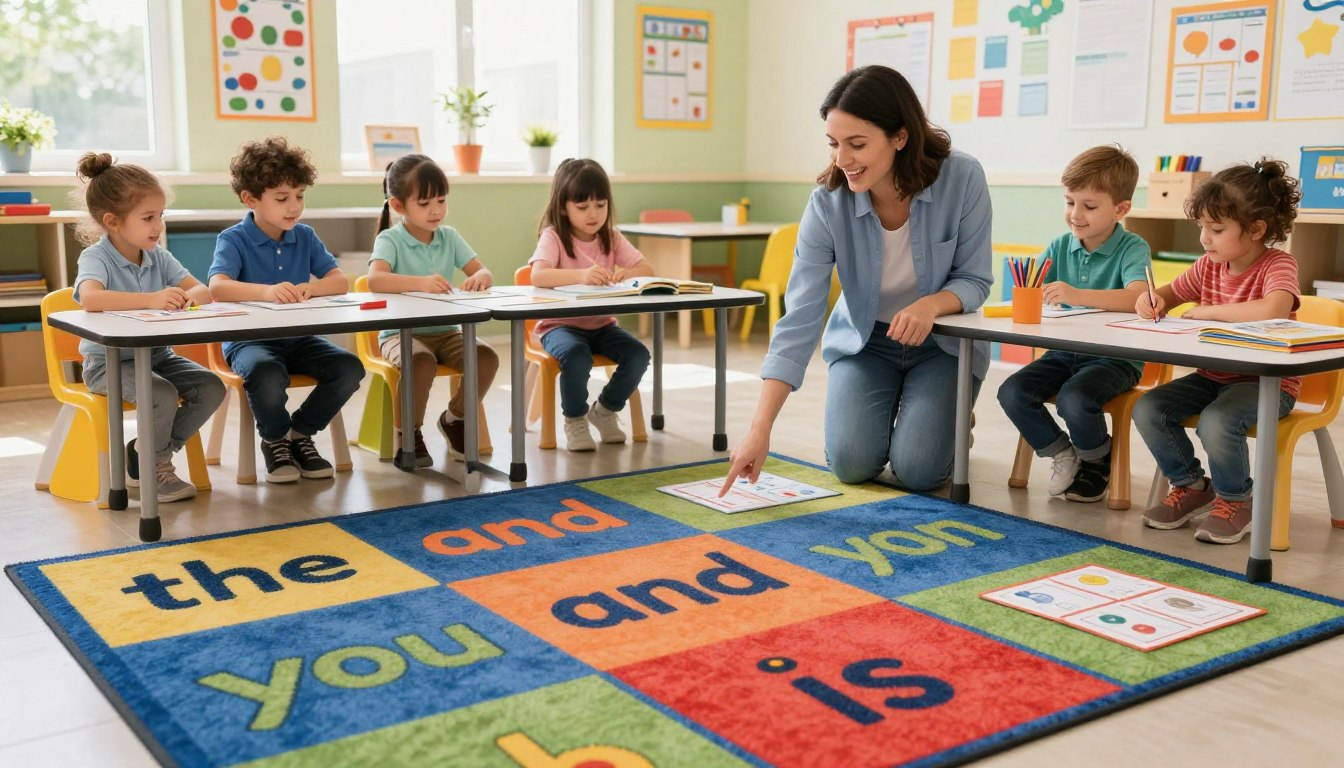
Imagine a four-year-old child looking at a cereal box during breakfast. Her face lights up with joy as she points and says, “I see ‘the’!”
This moment is a big step in a child’s learning. It shows how important it is to help them learn sight words.
By making a weekly plan, parents can help kids improve their reading. Learning high frequency words for 5 year olds makes reading easier. It helps kids feel more confident in their reading skills.
Starting a sight words for 5 year olds routine helps kids feel supported. It makes learning fun for both the parent and child. This is the foundation kids need to become great readers.
Understanding Sight Words and Why They Matter for Young Readers
When kids start reading, sight words help a lot. Sight words are common words kids learn to see and know, not sound out. This lets them read faster and understand more.
What Are Sight Words?
Sight words are words kids see and know, not sound out. They are called “high-frequency words” because they show up a lot. Words like “the,” “and,” “is,” and “for” are examples.
The Role of Sight Words in Early Literacy
Sight words are very important for early reading. They help kids read better and understand more. When kids don’t struggle with common words, they can get the story’s meaning.
Benefits of Sight Words:
- Improved reading fluency
- Enhanced comprehension
- Increased reading confidence
High Frequency Words for 5 Year Olds
For 5-year-olds, learning common words is key. Some common sight words for them are:
| Word | Example Sentence |
|---|---|
| the | The dog is happy. |
| and | I like reading books and playing outside. |
| is | She is a good reader. |
Knowing these common words is very important for young readers. It helps them read better and feel more confident.
How Sight Words Build Reading Confidence and Fluency

Sight words help kids read better and faster. They make reading smooth and accurate.
Knowing sight words lets kids understand the story better. They don’t get stuck on hard words. This makes them read faster and understand more.
Accelerating Reading Speed and Comprehension
Fun sight words activities and sight words games help kids learn these words fast. This is key for reading well.
As kids get better at recognizing sight words, they read faster. They read with more feeling and get the story better.
Reducing Frustration During Reading Time
Struggling to read often means not knowing common sight words. Learning these words makes reading time less stressful.
Learning sight words makes kids more confident readers. This confidence helps them enjoy reading more and explore different books.
Creating Independent Readers
Doing sight words activities and sight words games makes reading fun for kids. This fun feeling is important for becoming independent readers.
As kids get better at recognizing sight words, they read on their own more. This is a big step in their reading journey.
Complete Sight Words List for 5 Year Olds

Parents and teachers need a good sight words list for kids. Sight words help kids learn to read. Knowing the right list is very important.
The Dolch Word List was made by Edward William Dolch in the 1930s. It has 220 “service words” found in kids’ books. It’s divided into levels to help teach kids at their own pace.
Starting with the Dolch Pre-Primer Words
The Dolch Pre-Primer list has 40 basic sight words. These words are common in early reading books. Examples are “a,” “and,” “is,” and “the.”
Edward Dolch said, “The Pre-Primer list is a starting point for reading.” It’s important to make learning fun and engaging for kids.
Progressing to Dolch Primer Words
When kids know the Pre-Primer words, they can move to the Dolch Primer list. This list has 52 more sight words. Examples are “about,” “around,” “because,” and “been.”
Learning these words helps kids understand sentences better. This is a big step in their reading journey.
Age-Appropriate Expectations and Milestones
Parents and teachers should know what to expect from 5-year-olds. By this age, kids should know many sight words. But, every child learns at their own speed.
A famous reading expert said, “Learning to read is a journey, not a destination.” Every child learns at their own pace.
Knowing what’s normal helps parents and teachers see if a child needs extra help. Regular practice and a supportive environment are key to reading skills.
The Weekly Sight Word Routine: A Day-by-Day Breakdown

Helping 5-year-olds learn sight words is easier with a weekly plan. Spend a few minutes each day on sight word practice. This boosts their reading skills and confidence.
Monday: Introduction and First Exposure
Monday starts the sight word adventure. It’s important to introduce new words in fun ways.
Presenting New Words Effectively
Begin by showing the new sight words clearly and loudly. Use flashcards or index cards to help your child see the words.
Visual Recognition Activities
Do activities that help your child see the words better. Try matching games or finding the words in books.
Tuesday: Hands-On Practice and Writing
Tuesday is for hands-on practice. It’s about writing and using the new sight words.
Tracing and Writing Practice
Have your child write the new sight words. Use worksheets or write in sand, shaving cream, or with markers.
Building Words with Magnetic Letters
Use magnetic letters to build the sight words. This helps your child spell and recognize the words better.
Wednesday: Active Learning Through Movement
Wednesday is for moving and learning. This makes remembering sight words fun.
Physical Activities with Sight Words
Do fun activities like “Jump on the Word” or “Sight Word Scavenger Hunt” at home.
Multi-Sensory Learning Approaches
Use different ways to learn like seeing, hearing, and doing. This keeps your child interested.
Thursday: Application in Reading Context
Thursday is for using sight words in reading. This shows how words work in sentences.
Reading Sight Words in Simple Sentences
Read sentences with the new sight words. This helps your child see the words in use.
Creating Stories Together
Make stories together with the new sight words. This is fun and helps your child learn.
Friday: Review and Celebration
Friday is for reviewing and celebrating. It’s a time to see how far you’ve come.
Quick Recognition Games
Play games like “Sight Word Bingo” or “Memory Match” to remember the week’s words.
Tracking and Celebrating Progress
Keep track of your child’s progress and celebrate it. This keeps them motivated and confident.
Proven Sight Words Activities for Daily Practice
To build a strong reading foundation, daily sight word practice is key. These activities are fun and fit different learning styles. This way, every child can learn and remember sight words well.
Flashcards: Best Practices
Sight words flashcards are great for memorizing. Make cards with the word on one side and a sentence or image on the other. This helps kids understand the word’s meaning and how to use it.
Use flashcards in quizzes to improve word recognition and recall. This makes learning fun and effective.
Interactive Writing and Rainbow Writing
Interactive writing makes writing fun and collaborative. Rainbow writing, tracing words with different colors, is a fun twist. It helps kids recognize words and improves their fine motor skills.
Sight Word Scavenger Hunts Around the House
Sight word scavenger hunts turn learning into a game. Kids search for and read sight words around the house. You can hide flashcards or write words on objects for a fun practice.
Incorporating Art and Craft Projects
Art and craft projects are a creative way to learn sight words. Kids can make word collages, draw pictures, or create decorations. These activities make learning fun and boost creativity and positive attitudes towards reading and writing.
Fun Sight Words Games That Keep Children Engaged

Learning sight words can be fun with games and activities for kids. Games make learning sight words enjoyable. They help kids remember and understand better.
Sight Word Bingo for Groups or One-on-One
Sight Word Bingo is a fun game for groups or one-on-one. Kids make bingo cards with sight words. Then, they mark words called out by the teacher.
Memory Match and Concentration Games
Memory Match games help kids focus and remember. Kids match sight word cards, improving their memory.
Sight Word Go Fish Card Game
The Sight Word Go Fish card game is fun. Kids ask each other for sight word cards. It’s good for recognition and social skills.
Digital Games and Educational Apps
Many digital apps and games teach sight words. They offer a fun, modern way to practice. Kids enjoy the interactive and rewarding parts.
Outdoor Chalk and Movement Games
Outdoor games like writing with chalk are exciting. Games like hopscotch with sight words mix fun with learning. It’s a great way to learn outside.
Sight Words Printable Resources and Worksheets
Parents and teachers can use printable resources to help kids learn sight words. These tools make learning fun and consistent. They help kids get better at reading.
“Printable resources allow for flexibility and creativity in teaching sight words,” says a renowned educator. They work well in many places, like homes and schools. This makes them very useful for teachers.
Free Sight Words Worksheets for Kindergarten
Kindergarten is a key time to start learning sight words. Free worksheets are a good place to start. They have fun activities like tracing and coloring.
Many websites have free worksheets for different learning styles. Using these daily helps kids learn important words.
Printable Flashcard Templates
Flashcards are great for remembering things. You can make sight word flashcards to fit your needs. They can be made from index cards or cardstock.
Flashcards let kids practice sight words anytime, anywhere. This makes learning on the go easy.
Progress Tracking Charts for Parents
It’s important to track how well kids are doing. Progress charts show how well they’re learning sight words. They can be very motivating.
With these charts, parents can see where their child needs help. This helps them teach better.
Word Wall Cards and Display Materials
A word wall surrounds kids with sight words. This helps them learn more. You can print and put these cards in places at home or school.
This display helps kids get used to sight words. It makes them easier to remember.
Key Benefits of Printable Sight Word Resources:
- Flexibility in teaching and learning
- Customization to suit individual learning styles
- Enhanced engagement through interactive activities
- Ability to track progress and identify areas for improvement
Troubleshooting Common Sight Word Learning Challenges
Learning sight words can be tough. Kids might forget them easily. It’s important for parents and teachers to help.
When Children Struggle with Word Retention
Word retention is a big challenge. Kids might learn a word but forget it soon. Spaced, repeated practice helps a lot.
Try using flashcards, word searches, and books with sight words. This makes learning fun and helps remember words.
Keeping Practice Sessions Positive and Stress-Free
Practice should be fun and stress-free. Short, engaging activities keep kids excited. Games like Sight Word Bingo and Memory Match are great.
Always praise their efforts and progress. This boosts their confidence. Being patient helps too, as frustration can stop them from learning.
Adjusting the Pace for Different Learning Styles
Every child learns differently. Some pick up sight words fast, others need more time. Teaching at their pace helps a lot.
Visual learners do well with flashcards and videos. Kinesthetic learners like moving around while learning. Knowing this helps teach better.
Recognizing When Additional Support May Help
Some kids just can’t get it, no matter how hard they try. It’s key to recognize when they need extra help. Talking to teachers or specialists can offer great advice.
Extra help can be one-on-one tutoring or specialized reading programs. Getting help early can really help kids overcome their challenges.
Conclusion
Creating a weekly routine for sight words can really help 5 year olds read better. Just a few minutes each day can make a big difference. It helps them learn to read early and well.
Learning sight words can be fun. Try using flashcards, scavenger hunts, and games. These activities make learning exciting and keep kids interested.
Following the tips in this article can help kids read better. Sight words are key for early reading skills. With regular practice, kids can read more confidently and love reading forever.
FAQ
What are the best sight words for 5 year olds to start with?
Start with the Dolch Pre-Primer list. It has simple words like “a” and “the.”
How often should we use sight words flashcards?
Use flashcards in short, quick sessions. Aim for 3 to 5 minutes, once or twice a day.
Are there free sight words worksheets for kindergarten available online?
Yes, many websites offer free worksheets. Use these to help your child practice at home.
How can I make sight words activities more fun for a child who hates sitting for long?
Make learning fun with games. Use sidewalk chalk or hide words around the house for a scavenger hunt.
What is the difference between sight words and high frequency words for 5 year olds?
Sight words are words kids learn to recognize quickly. High frequency words are words that appear often in print.
Can digital apps help with sight words for kindergarten?
Yes, apps like Endless Reader and PBS Kids Games are great. They make learning fun and interactive.