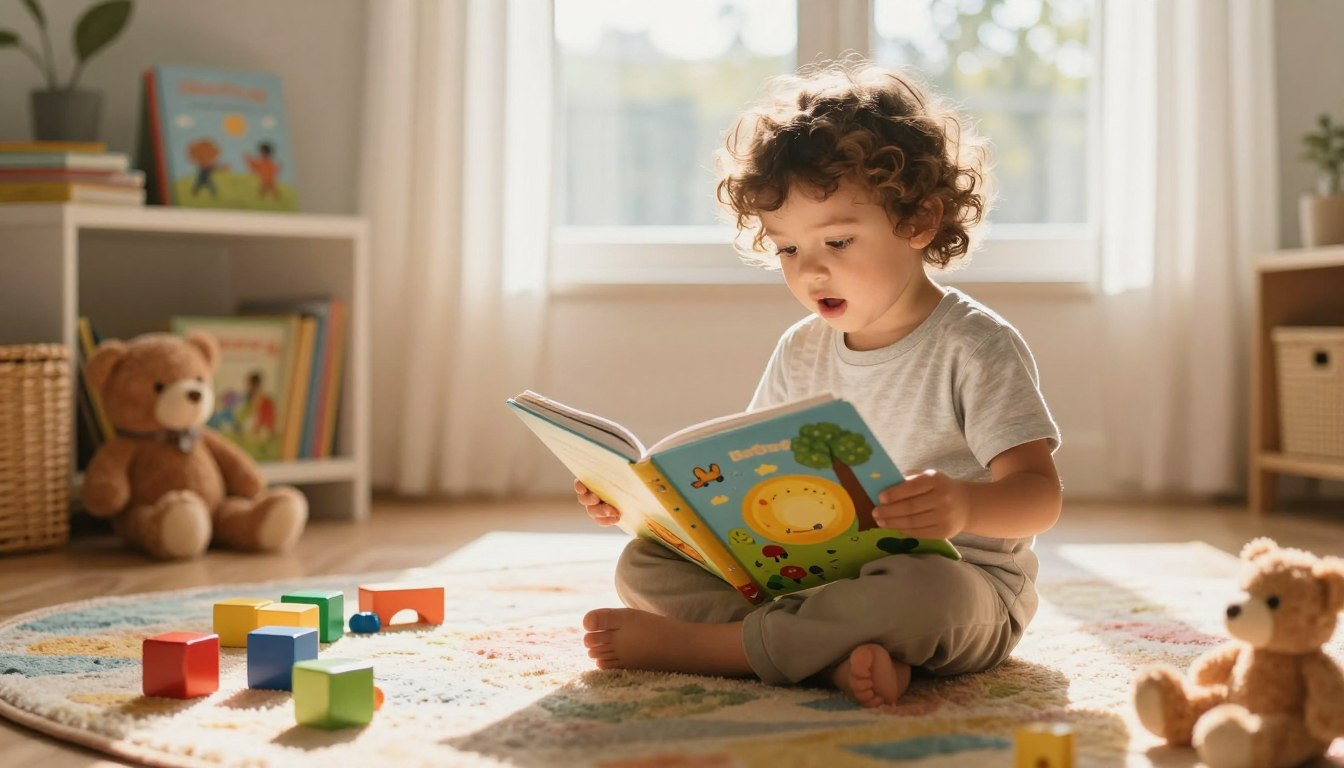
Imagine the warmth of a shared book, where a child’s eyes light up with a new idea. This bond creates more than just memories; it builds a bridge to a bright future. Growing strong literacy skills starts well before a child picks up a big book.
Ascend SMARTER Intervention notes that starting literacy instruction early helps students achieve lifelong success. By asking specific questions, we help young minds connect dots between pictures and plots. These early habits turn passive listeners into active thinkers who love to explore new worlds.
Guiding a young learner through a tale does not need to be hard. Reading comprehension for kindergarten is about building curiosity with simple talks. These prompts help you unlock their skill and make every storytime a chance to grow.
Key Takeaways
- Early literacy instruction helps students reach lifelong goals.
- Specific questions turn listeners into active thinkers.
- Simple talks about a plot build deep curiosity.
- Connecting pictures to stories improves mental growth.
- Every storytime is a chance to boost future academic skills.
- Starting habits now creates a path to lasting success.
Why Reading Comprehension Matters in Kindergarten
Learning to read well from a young age is key for kids. It helps them become great readers. Lisa Clark, a Youth Collection Librarian, says reading and understanding words together is important for kids starting school.
Reading isn’t just about getting the words right. It’s about setting up kids for success in school. They learn to think deeply, share their thoughts, and connect what they read to their own life.
The Building Blocks of Lifelong Learning
Reading skills in kindergarten are the start of lifelong learning. These early years help kids think critically, express themselves, and grasp big ideas. By focusing on reading, kids can handle harder stuff later on.
- It helps them understand and make sense of texts.
- It makes them love reading and learning more.
- It prepares them for success in many subjects.
Beyond Decoding Words
Decoding words is important, but reading comprehension is more. It’s about getting the story, knowing who’s who, where it happens, and what happens. It’s what makes readers good at tackling tough texts.
“Comprehension is the ultimate goal of reading. Without it, reading is just recognizing words on a page.”
By focusing on reading comprehension in kindergarten, teachers and parents help kids become skilled readers. They learn to understand and make sense of many kinds of texts.
The Foundation of Reading Comprehension for Kindergarten
Kindergarten is when kids start learning to read. They learn skills that help them understand books later on.
Understanding Early Literacy Development
Learning to read is more than just knowing words. It’s about understanding what the text means. Comprehension activities for kindergarteners help with this.
Ascend SMARTER Intervention says starting comprehension early is key. It helps kids use strategies when listening to stories.
What Kindergarteners Can Understand
Kindergarteners can understand a lot. They get basic story parts like characters and settings. Talking about stories helps them learn more.
Interactive reading is very important for young kids. Here’s a table about early literacy skills for kindergarteners:
| Aspect | Description | Example Activity |
|---|---|---|
| Story Comprehension | Understanding the narrative | Discussing the plot after reading |
| Vocabulary Building | Learning new words | Using context clues to understand new vocabulary |
| Critical Thinking | Analyzing information | Asking open-ended questions about the story |
Building Critical Thinking Skills from the Start
Critical thinking starts early in school. It’s about analyzing and making connections. Reading helps kids think critically.
The Role of Questioning in Learning
Questions are key to learning. They make kids think deeply about stories. This helps them understand and think better.
Helping kids in kindergarten is important. It sets them up for success in school. Meaningful talks and activities help their early literacy skills.
Question 1: What Happened in the Story?
Parents and teachers can start by asking, “What happened in the story?” This question helps kids remember events and tell the story. It’s a basic step to better understanding stories.
Why This Question Works for Young Readers
This question helps kids remember what they read. It’s a key skill for reading well. It makes them think about the story and find important parts.
How to Ask It Effectively
It’s important to ask this question in a way that works for the child.
Starting with Simple Prompts
Start with easy questions like “What was your favorite part?” or “What did the main character do?” These questions help kids remember without feeling too much pressure.
Using Visual Cues from Illustrations
Young readers can use pictures to help them. Ask, “What is happening in this picture?” It helps them connect the story to the pictures.
Example Conversations Using This Question
This question can be used in different ways, depending on the story type.
For Fiction Stories
For stories with dragons and knights, ask, “What did the dragon do when it met the knight?” This question helps kids remember and understand the story better.
For non-fiction, ask, “What did you learn from this story?” or “What was the main event described?” This helps kids find important information and understand the story’s purpose.
Using “What happened in the story?” in reading routines helps kids a lot. It’s a great reading comprehension resource. It makes them remember better and enjoy reading more.
Question 2: Who Were the Main Characters?

The second question to ask after reading a story is “Who were the main characters?” This question helps children focus on the key figures in the narrative. It enhances their understanding of the story and develops their critical thinking skills.
Helping Children Identify Key Characters
To help children identify the main characters, start by asking simple questions. Ask “Who is the story about?” or “Who is the main character?” as suggested by Lisa Clark, Youth Collection Librarian. This encourages them to think about the central figures in the story.
Distinguishing Main Characters from Supporting Ones
It’s essential to help children distinguish between main and supporting characters. You can do this by discussing how the story would change without the main character. For example, you might ask, “What would happen if the main character wasn’t in the story?”
Discussing Character Traits and Actions
Once children have identified the main characters, explore their traits and actions. Ask questions like “What did the main character do in the story?” or “How did the main character feel?” This helps children understand the characters’ motivations and behaviors.
What Makes Characters Special
Discussing what makes characters special can help children develop a deeper understanding of the story. You might ask, “What made the main character brave?” or “Why was the main character important to the story?”
Making Character Connections
Helping children make connections between the characters and their own experiences can enhance their reading comprehension. Ask them to relate the characters’ actions or feelings to their own lives.
Relating Characters to Personal Experiences
For example, you could ask, “Have you ever felt like the main character?” or “Can you think of a time when you did something similar to the main character?” This helps children see the relevance of the story to their own lives.
Question 3: Where and When Did the Story Take Place?
When kids read stories, asking about the setting helps them get it better. This question makes them think about where and when the story happens. It helps them understand and connect with the story more.
Teaching Setting Awareness
Knowing the setting is key for improving reading comprehension in kindergarten. It means knowing when and where the story happens.
Identifying Place Through Pictures and Words
Kids can find the setting by looking at pictures and reading words. For example, if a story is set in a forest, pictures might show trees and animals. The text might say the forest is “dense” or “magical.”
Finding out when a story happens can be tough for young readers. They need to look for clues in the text or pictures. These clues might be old clothes or historical events.
Connecting Settings to Real Life
Linking the story’s setting to real life makes it more fun for kindergarten readers.
Comparing Story Settings to Familiar Places
By comparing the story’s setting to places they know, kids can understand it better. For example, if a story is set in a park, kids can think about their own park visits. They can connect their experiences to the story.
Lisa Clark, Youth Collection Librarian, says to ask questions halfway through the story. Questions like “How is this character feeling? Where is this character going?” keep kids curious and engaged.
Question 4: How Did the Characters Feel?
Stories help young readers feel and understand others. When we read with kids, asking about characters’ feelings is key. It helps them learn about emotions and grow emotionally.
Developing Emotional Intelligence Through Stories
Stories are great kindergarten literacy tools. They help kids understand and deal with different feelings. By seeing how characters feel, kids learn about emotions.
Naming and Identifying Emotions
Learning to name and identify emotions is important. When reading, ask your child to say how characters feel. Look at pictures and ask, “How do you think they are feeling?”
“How do you think they are feeling? Have you ever felt this way?” are useful questions to ask.
Recognizing Emotions in Text and Illustrations
Text and pictures in stories show characters’ feelings. By looking at both, kids learn more about emotions.
Reading Facial Expressions and Body Language
Pictures show characters’ feelings through faces and body language. Ask your child to notice these signs. For example, a sad face and slumped body might mean the character is feeling down.
Understanding Emotional Changes Throughout the Story
Characters’ feelings change in stories. Talking about these changes helps kids understand and grow emotionally. Ask, “How did the character’s feelings change when [event happened]?”
Practicing Empathy Skills
Empathy is key to emotional growth. By imagining themselves in characters’ places, kids learn to understand and share feelings.
Asking “How Would You Feel?”
Asking kids to imagine how they would feel helps them empathize. For example, “How would you feel if you were lost in the woods like the character?” This connects the story to their own feelings.
| Empathy-Building Questions | Purpose |
|---|---|
| How do you think the character felt when…? | Encourages understanding of character emotions |
| Have you ever felt like the character? | Helps children relate to the character’s emotions |
| How would you feel if you were in the character’s shoes? | Develops empathy by considering alternative perspectives |
Question 5: Why Do You Think That Happened?
This question, ‘Why do you think that happened?’, is key for young readers. It helps them think more than just the words in the story. It’s important for developing reading comprehension for kindergarten students.
Encouraging Cause-and-Effect Thinking
Cause-and-effect thinking is a big deal for kids. It helps them see how events in a story are connected. Asking ‘Why do you think that happened?’ makes them think about why characters act a certain way.
Making Connections Between Events
Encourage kids to connect story events. For example, if a character is sad, ask what might have made them sad. This builds their understanding of stories, which is key for developing reading skills.
Supporting Predictions and Inferences
This question also helps with making guesses and inferences. When kids guess why something happened, they’re using the story’s clues. This is a way to practice making smart guesses.
Teaching Children to Use Story Clues
To guess well, kids need to spot story clues. Clues can be pictures, words, or events. For example, if a character is crying, the picture tells us they’re upset.
Building Reasoning Skills
Using story clues helps kids think better. They learn to find clues and see how they fit into the story. This makes them better at understanding and thinking critically.
Accepting Different Interpretations
It’s also important to accept that there are many ways to see a story. Kids should know that different reasons can be right for why something happened.
Validating Multiple Perspectives
By talking about different reasons for story events, kids learn to value different views. This not only helps them understand better but also teaches empathy. They see that people can see things differently.
Using this question in reading time helps a lot. It makes kids more engaged with the story. It also helps them think better, which is good for more than just reading.
How to Make These Questions Work for Any Story

To help kindergarteners love reading more, we need to change questions for different stories. This makes reading fun and helps kids learn about many kinds of stories.
It’s important for parents and teachers to make questions fit the book. This way, reading becomes more fun and helps kids learn better.
Adapting Questions for Different Book Types
Each book type needs its own way of asking questions. Knowing this helps make reading more fun and clear for kids.
Picture Books and Early Readers
Picture books and early readers use pictures and words together. Ask kids to talk about what they see in pictures and how it connects to the story.
For example, you might ask, “What do you think will happen next based on the picture on this page?” or “How does the character’s expression in this illustration make you feel?”
Non-Fiction and Informational Texts
Non-fiction books need questions that help kids get the main ideas. You can ask, “What is this book mainly about?” or “What did you learn from this chapter that surprised you?”
“Try pairing nonfiction books with fiction books to expand on topics your child shows an interest in.” – Lisa Clark, Youth Collection Librarian
Mixing different books helps kids learn more about a topic. It makes them understand things better.
Adjusting Based on Your Child’s Responses
It’s key to listen to what your child says. This helps you know if they get it and change your questions if needed.
When to Probe Deeper
If your child really gets into a part of the story, ask more detailed questions. For example, if they talk about a character’s feelings, ask, “Why do you think the character felt that way?”
When to Move Forward
If your child seems lost or not interested, it’s okay to move on. You can always go back to hard parts later with a new way to look at them.
| Book Type | Questioning Strategies | Goals |
|---|---|---|
| Picture Books | Encourage description of illustrations, relate images to text | Enhance visual literacy, understand story context |
| Early Readers | Focus on basic comprehension, character actions | Build foundational reading skills, confidence |
| Non-Fiction/Informational Texts | Main ideas, supporting details, new vocabulary | Improve understanding of factual content, critical thinking |
Creating a Reading Routine with Comprehension Questions
Creating a reading routine with comprehension questions is great for kindergarten reading strategies. It makes reading fun and helps kids learn more. Parents can really help their child’s early literacy skills this way.
Eunice Torralba, a researcher, says, “Storytelling is a fun way to spend time with your child.” This shows how important it is to make reading a positive experience.
Best Times to Practice Reading Comprehension
Finding the best times to practice reading comprehension is key. It helps a lot in a child’s learning.
Bedtime Reading Sessions
Bedtime is a great time for reading comprehension. The quiet and cozy setting helps kids focus and enjoy the story more.
Library Visit Follow-Ups
After visiting the library, asking comprehension questions helps kids remember what they learned. It also keeps their love for reading alive.
Making It Fun, Not a Test
Reading comprehension should be fun, not a test. We can make it enjoyable by talking like friends and celebrating all answers.
Using a Conversational Approach
Talking like friends when asking questions makes kids feel comfortable. It encourages them to share their thoughts freely.
“The art of conversation is the art of hearing as well as being heard.” – William Hazlitt
Celebrating All Responses
Celebrating every answer creates a positive learning space. It shows that all thoughts are valued.
| Activity | Benefits |
|---|---|
| Bedtime Reading | Enhances comprehension in a relaxed setting |
| Library Follow-Ups | Reinforces learning and encourages continued reading |
| Conversational Approach | Makes the experience enjoyable and engaging |
Common Challenges and How to Overcome Them

When you read with your child, you might hit some bumps. Talking about stories can be fun but tricky. Knowing the challenges helps make reading better and more fun for everyone.
When Your Child Won’t Answer
It’s normal for kids to be shy or not get it. They might not like talking about stories yet.
Strategies to Encourage Participation
Make reading fun by asking open-ended questions. Instead of “Did you like the story?”, ask, “What was your favorite part and why?” This makes them think more and share their thoughts.
Make them feel safe when they talk. Don’t correct them too much. Praise their efforts and keep them talking.
Dealing with Short or One-Word Responses
Kids might give short answers because they’re shy or unsure.
Expanding Answers Through Follow-Up Questions
Ask more questions to get them to talk more. If they say, “The character was sad,” ask, “What made them sad?” or “How did that make you feel?” This helps them understand better and talk more.
Ascend SMARTER Intervention says follow-up questions help kids think more. They improve reading and thinking skills.
Managing Distracted Listeners
Today, distractions are everywhere. Keeping focus is important for reading.
Making Stories More Engaging
Choose stories that interest your child. Use different voices for characters and ask questions. Relate the story to their life to make it more fun.
Use pictures or activities from the story to keep them interested. Drawing or acting out scenes makes reading fun and interactive.
Additional Activities to Boost Kindergarten Reading Skills
There are many ways to help your child love reading more. Doing different activities together can make them better at reading. It also helps them enjoy reading more.
Drawing Story Scenes
Drawing pictures from stories is great for kids. It helps them remember the story better. It also lets them use their imagination.
Acting Out Favorite Stories
Acting out stories is fun and helps kids remember. It makes the story come alive. They get to be the characters.
Creating Story Sequencing Cards
Story sequencing cards teach kids about stories. They learn the start, middle, and end. It’s like putting together a puzzle.
Other fun activities can also help. Lisa Clark, a librarian, suggests them. They make reading even more exciting for kids.
- Prediction: Guess what happens next in the story.
- Summarizing/Retelling: Tell the story in your own words.
- Inference: Talk about what the story means.
- Making Connections: Link the story to your life or other books.
Conclusion
Reading well in kindergarten is key for learning all your life. Asking five simple questions after a story helps a lot. These questions make your child think, feel, and understand stories better.
Reading with your child should be fun and exciting. Ask questions like “What happened?” or “How did they feel?” to make them think more. This helps them love reading forever.
These questions are great for reading aloud with your students, as suggested by Ascend SMARTER Intervention. Making reading important helps your child start strong in school.
Reading comprehension for kindergarten: 5 questions to ask after any story
What are the best reading comprehension for kindergarten strategies for beginners?
The best strategies include active engagement, like “picture walking” and making predictions. Use the five key questions (Who, What, Where, How, and Why) to spark conversations.
How can I find quality reading comprehension resources for my child?
Look for reputable brands like Scholastic, PBS Kids, and Reading Rockets. They offer age-appropriate books and literacy tools for parents and teachers.
My child can read words but doesn’t understand the story. How can I help with improving reading comprehension?
This is common! Focus on reading aloud to them. This frees up their brain to focus on the story’s meaning, which is key for reading skills.
Are there specific comprehension activities for kindergarteners that don’t involve books?
Absolutely! Discussing your day can practice sequencing and cause-and-effect. Ask, “What did we do first this morning?” or “Why do we need to wear a coat today?” These conversations build important reading skills.
How long should we spend on kindergarten reading strategies each day?
Consistency is more important than how long you spend. Just 15 to 20 minutes of shared reading and conversation a day can greatly improve early literacy skills.