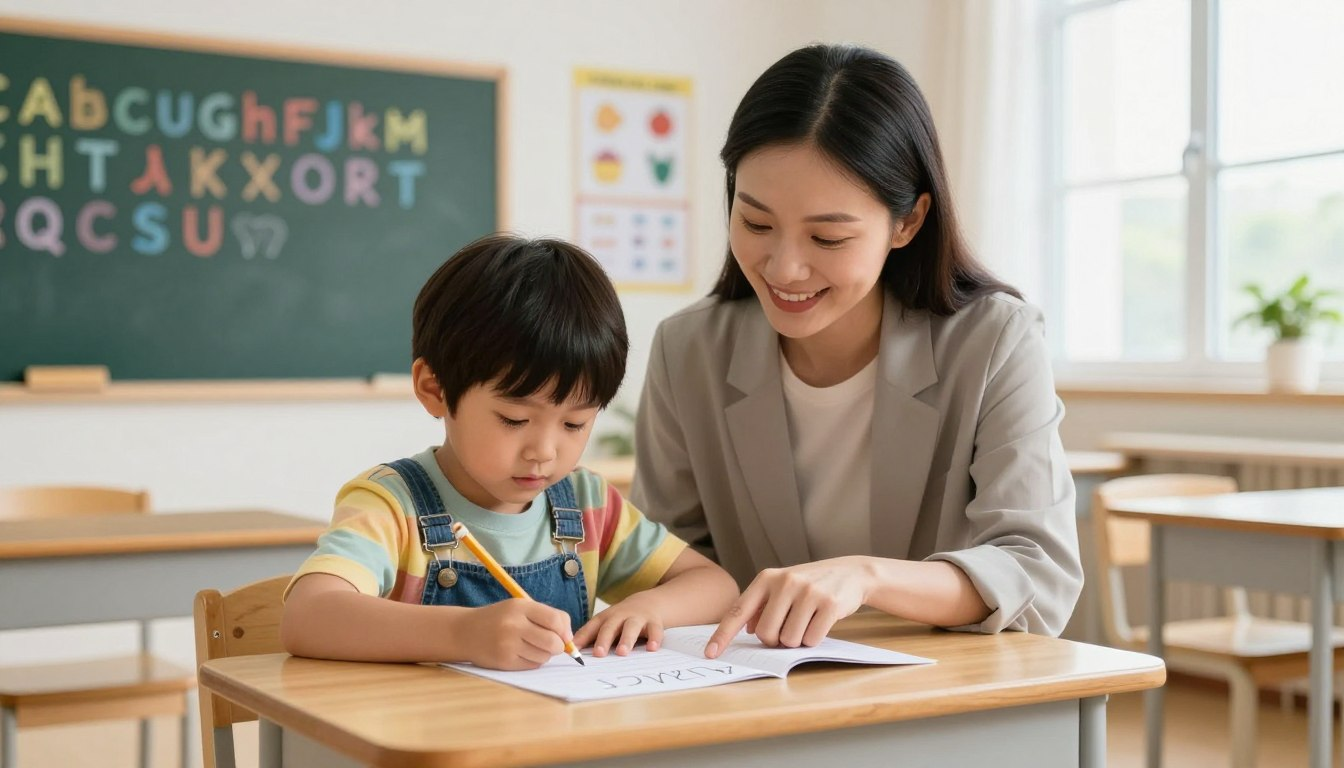
Dr. Seuss once said, “The more that you read, the more things you will know. The more that you learn, the more places you’ll go.” This quote shows why early childhood writing education is so important in the United States today.
Teaching a young student the alphabet is a big step in their education. Learning these letters helps them read, understand, and do well in school. It’s the start of thinking for themselves and being creative.
When we teach teaching writing skills, we help kids turn simple lines into real messages. This helps them get better at using their hands and thinking clearly. Learning to write letters makes them ready to write their first sentences with pride.
Key Takeaways
- Early writing skills are the base for all future school success and reading.
- Learning letters helps kids get better at using their hands and eyes together.
- Knowing the alphabet is key for reading and writing sentences.
- Practicing writing turns letters into tools for talking to others.
- Going from letters to sentences is a big step in growing up.
- Having a supportive place helps five-year-olds enjoy telling stories.
Understanding Writing Readiness in Five-Year-Olds
Figuring out if a five-year-old is ready to write involves looking at a few important things. At this age, kids are getting better at using their hands for small tasks. This is key for writing. They can get better at this by doing hand activities that help them grip and move their hands and fingers.
Physical Development Indicators to Look For
One big sign of being ready to write is physical development. Kids should be able to hold a pencil or crayon right and move it well.
Playing with playdough or clay helps their hands and fingers get stronger. Also, if they can draw simple shapes and lines, it means their fine motor skills are good.
Cognitive Skills That Support Early Writing
Cognitive skills are also very important for writing. Kids need to know that writing means something and uses symbols (letters) to show sounds.
If a child can name letters, understand stories, and likes to write, they’re ready to start. These are signs they have the right thinking skills for writing.
Signs Your Child Is Ready to Begin
There are a few signs that show a child is ready to start writing. They might show interest in writing and drawing. They should be able to hold a writing tool right and make simple marks on paper.
If a child can make scribbles that look like writing, it’s a good sign. It means they’re ready to learn how to write letters and simple words.
Gathering Essential Materials and Tools

Getting the right stuff is key to making a fun and helpful place for kids to write. It’s important to pick things that are both fun and teach them something. This helps them learn to write better.
Choosing the Right Writing Instruments
First, pick the right tools for your child to start writing. Washable markers and crayons are great because they’re easy to hold. When they get better, try pencils with ergonomic grips to help them hold it right.
It’s good to have many tools to keep things fun. Colorful pens and pencils make writing more fun for kids.
Selecting Appropriate Paper and Writing Surfaces
The paper and surface matter a lot for kids to write well. Wide-ruled paper helps them see letters better. It’s good for beginners because it gives them more space.
A flat, stable table or desk is best for writing. It helps kids write right and keeps them comfortable.
Helpful Supplementary Learning Aids
There are extra tools that help kids learn to write. Alphabet flashcards and writing workbooks teach letters and how to write them.
Stencils and tracing guides help kids practice writing letters. These tools make learning fun and keep kids excited to write.
How to Teach Writing to a 5 Year Old: Foundation Strategies

Learning to write starts with fun and learning. It’s important to make it enjoyable for young children.
Creating an Encouraging Learning Space
A good learning space is key. Make a special writing area for your child. It should be bright, comfy, and have all the tools they need.
Decorate it with colors to spark creativity. Keep it quiet so your child can focus.
Setting Age-Appropriate Goals and Expectations
Set realistic goals for your child. Don’t expect too much too soon. Goals should match their age, like learning letters and simple words.
- Know where your child is in writing.
- Set goals that are easy to reach.
- Celebrate small wins to keep them excited.
Establishing a Daily Writing Routine
Writing every day is important. A daily writing routine helps build a habit. Keep it short for young ones.
Start with 5-10 minutes and grow it as they get better.
Making Writing Fun and Engaging
Make writing fun for your child. Use colored pencils, gel pens, highlighters, or erasable markers to make it fun. Add games and activities to make learning fun.
- Use different colored pens to write letters or words.
- Play word games that involve writing.
- Create a story together, taking turns to write a sentence.
Strengthening Fine Motor Skills Through Pre-Writing Activities

Fine motor skills are key for writing. Before learning letters, kids need hand strength and dexterity.
Pre-writing activities get kids ready for writing. They make learning fun and interactive. These activities help kids hold and use writing tools.
Tracing Lines, Shapes, and Patterns
Tracing helps kids develop writing skills. It improves hand and finger control.
- Tracing lines helps with straight letters.
- Curves prepare for curved letters.
- Shapes and patterns improve hand-eye coordination.
Using Playdough and Clay for Hand Strength
Playdough and clay strengthen hands. Rolling, squishing, and molding build grip strength.
Some fun playdough activities include:
- Rolling into balls or snakes.
- Molding shapes and objects.
- Using cookie cutters for fun shapes.
Playing Games That Build Finger Dexterity
Finger dexterity is important for writing. Games that improve finger strength are helpful.
Examples include:
- Playing with finger puppets.
- Games like “Where is Thumbkin?”
- Using tweezers for small objects.
Adding these activities to a child’s day helps build writing skills. Parents and teachers can make a big difference.
Teaching Letter Formation Step by Step
Teaching a 5-year-old to write letters is fun. It takes a few steps to help them learn well.
Demonstrating Proper Pencil Grip and Posture
First, make sure the child holds the pencil right. This helps them write without getting tired.
Tips for Proper Pencil Grip:
- Hold the pencil between the thumb and index finger.
- Rest the pencil on the middle finger.
- Avoid gripping the pencil too tightly.
Starting with Straight-Line Letters
Start with letters like “l,” “t,” and “i.” They are easy for kids to learn first.
The Handwriting Without Tears method is great. It teaches letters in a way that makes sense.
Introducing Curved and Circle Letters
When kids get better, teach them letters with curves and circles. This helps their fine motor skills.
Practicing Uppercase Letters First
Some say start with big letters. They are simpler and fun for kids to write.
Moving to Lowercase Letter Formation
When kids are ready, teach them small letters. These need more precision.
Using Multi-Sensory Techniques for Memory
Make learning fun by using different ways to practice. Try tracing in sand or using playdough.
Progressing from Letters to Simple Words
When kids learn to write letters, they can start writing simple words next. This is a big step in their writing journey. It makes them better at writing and more confident in writing things down.
Helping kids get better at writing is fun and interactive. When writing is enjoyable, kids are more likely to like it.
Writing the Child’s Name as the First Goal
Writing their name is a big deal for kids. It’s something personal and easy for them to recognize. Start by practicing each letter in their name.
Teaching Common Sight Words
Sight words are words that kids recognize by sight, not sound. Learning these words makes them better readers and writers. Start with simple words like “the,” “and,” and “is.”
Practicing Letter Spacing Within Words
It’s important for words to be spaced right so they’re easy to read. Kids should leave a small gap between letters. This can be practiced in writing exercises.
Introducing Word Families
Word families are words that sound the same at the end. Learning these helps kids see patterns in words and learn new words. Examples include -at, -an, and -in families.
| Activity | Description | Learning Outcome |
| Writing Name | Practice writing their full name correctly | Recognize and write their name |
| Sight Words | Introduce common sight words through flashcards and writing exercises | Improve reading fluency |
| Letter Spacing | Guided exercises to practice appropriate spacing between letters | Enhance word readability |
| Word Families | Teach -at, -an, -in word families through examples and writing practice | Recognize word patterns and expand vocabulary |
Guiding Children to Write Their First Sentences
Teaching a child to write their first sentences is very important. At this stage, they learn to write letters and words. They also start to understand how to share their thoughts in simple sentences.
Start with the basics to help them learn. Introduce simple sentence structures like subject-verb-object (SVO). This helps them make sentences that make sense.
Starting with Simple Subject-Verb-Object Patterns
Begin with simple SVO patterns. Sentences like “The cat sleeps” or “She eats an apple” are easy to follow. This makes them feel more confident in writing.
Make learning fun with interactive writing lessons for kids. You can use activities like filling in the blanks or rearranging words.
Using Visual Prompts and Story Starters
Visual prompts and story starters are great tools. Pictures or objects can spark their creativity. They can write stories or describe what they see.
For example, a picture of a sunny day at the beach might inspire a child to write, “The sun is shining.” These exercises improve their writing and imagination.
Teaching Capital Letters and Periods
Teach children about capital letters and periods as they start writing sentences. Explain that the first letter of a sentence is capitalized. A period marks the end of a sentence.
Practice these rules through early childhood writing education activities. Activities like tracing sentences or writing simple sentences help them remember.
Maintaining Proper Spacing Between Words
Teach children to space words correctly. Show them how to leave a finger space between words. This makes their writing easier to read.
Encouraging Personal Expression and Ideas
Encourage children to share their own ideas and thoughts through writing. Let them choose their own story starters or topics. This helps them love writing and be creative.
By following these steps and creating a supportive learning environment, children can learn to write their first sentences. This lays a strong foundation for their future writing skills.
Addressing Common Writing Challenges and Frustrations
Teaching young children to write can be tough. It needs patience and understanding from teachers and parents. Kids may face many problems while learning to write.
Correcting Letter Reversals Gently
Letter reversals are a big challenge. Kids might mix up “b” and “d” or “p” and “q.” Gentle correction is important. Harsh words can make them stop trying.
Parents and teachers can use multi-sensory techniques. These help kids remember how letters look right.
Managing Tiredness and Short Attention Spans
Young kids get tired and lose focus quickly. This is true for writing, which needs fine motor skills. Break writing into shorter sessions to keep them interested.
Make these sessions fun. This helps build their endurance slowly.
Improving Inconsistent Letter Sizing
Letter sizes can be all over the place when kids start writing. Help kids check and fix their work. Lined paper helps keep letters the same size.
Supporting Left-Handed Children Effectively
Left-handed kids need special help. Make sure they have left-handed tools. This includes scissors and pencil sharpeners.
Position their writing area right. This reduces strain and makes writing easier.
Dealing with Resistance to Writing Practice
Some kids don’t want to write because it’s hard or boring. Make writing fun. Use games and interesting tools.
Make what they write about something they like. This helps them enjoy writing more.
Conclusion
Teaching a 5-year-old to write is rewarding. It needs patience, practice, and focus on pre-writing skills. This helps kids improve their fine and gross motor skills.
Early writing education is key for future success. Parents and teachers should create a supportive learning space. They should make writing fun and achievable.
By following these tips, adults can help kids overcome writing hurdles. With regular practice and encouragement, teaching writing to a 5-year-old is fun. It sets the stage for a lifelong love of writing and learning.
FAQ
What are the best writing activities for preschoolers to build hand strength?
Activities like squeezing Play-Doh and using tweezers help a lot. Playing with Crayola modeling clay is also good. These activities make hands strong for holding pencils.
When is the right time to start teaching writing skills to a child?
Start when they can sit up and hold a pencil. If they like letters in books or try to write, they’re ready.
How can I make teaching handwriting to a 5 year old more engaging?
Make it fun like play. Try drawing in colored sand or using salt boards. These methods are fun and help remember letters.
What tools are recommended for developing writing abilities in young children?
Use special pencils and paper. Triangular pencils and wide-ruled paper with dots help a lot. They make learning letters easier.
How do interactive writing lessons for kids help with sentence construction?
These lessons connect words and symbols. Use pictures to help write simple sentences. It’s a great way to practice writing.
What is the most effective way of teaching writing skills to a left-handed child?
Angle the paper for left-handed kids. Use good pencils to avoid smudges. This makes learning fun for everyone.
Why is early childhood writing education focused so much on “pre-writing”?
Pre-writing strokes like circles and lines are key. They help kids learn letters. Doing these activities prepares them for writing.