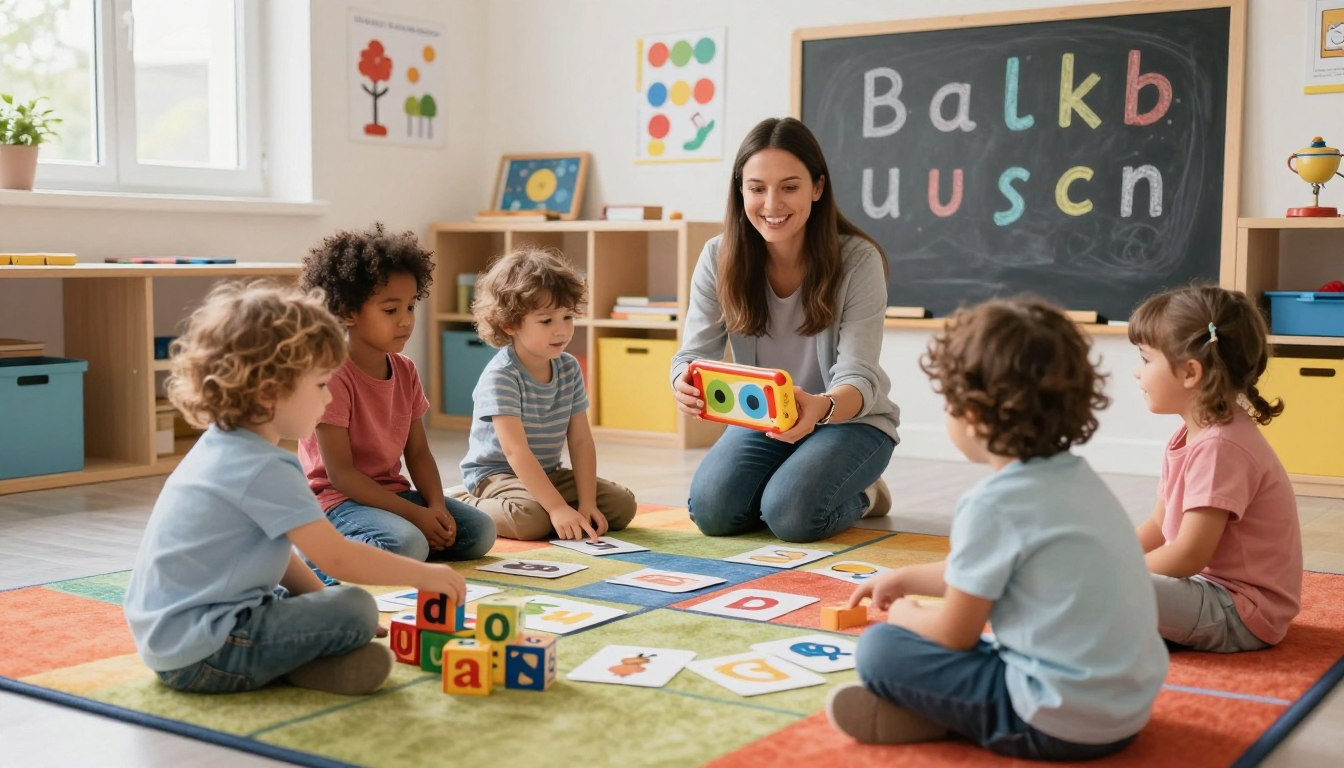
“The more that you read, the more things you will know. The more that you learn, the more places you’ll go.” — Dr. Seuss. This famous quote shows why we start learning early. For toddlers, early literacy development starts before they see letters.
It begins with listening to the world. Playing with phonics activities helps kids hear different sounds. These fun times improve their hearing and get them ready to read.
It’s key to have a place full of rhythm and stories. This lets kids easily pick up English sounds. It makes every moment a step towards becoming a confident and happy reader.
These basic skills help kids get ready for school. Parents can add these to their daily life easily. The goal is to make learning fun, so it’s always a positive experience.
Understanding Pre-Phonics and Sound Awareness
The journey to reading and writing starts with pre-phonics. It introduces kids to sounds. Pre-phonics activities are fun and engaging. They help lay the groundwork for reading skills by improving sound awareness in young children.
What Is Pre-Phonics?
Pre-phonics is the first step in phonics teaching. It helps toddlers develop listening and language skills. It includes phonics activities that are not about reading or writing yet. These activities help kids notice the sounds around them. They learn that sounds are the foundation of language.
The Role of Sound Awareness in Early Literacy
Sound awareness is key in early literacy development. It lets kids tell apart different sounds. This skill is vital for reading and spelling. By doing phonics activities, toddlers start to see how sounds and letters connect. This is the start of their reading journey.
How Pre-Phonics Differs from Formal Phonics Instruction
Pre-phonics is different from formal phonics teaching. Formal phonics teaches kids to sound out words and read. But pre-phonics prepares toddlers for this by improving their listening skills through play. It’s about making a sound-rich world that helps kids appreciate sounds.
Why Sound Awareness Matters for Three-Year-Olds
Early sound awareness is key for young kids. It helps them start reading well. This skill lets them recognize and play with sounds, which is important for reading and writing.
Building the Foundation for Reading Success
Teaching sound awareness to three-year-olds is a big step in their reading journey. It helps them see how sounds and words connect. Playing phonics games for preschoolers makes learning fun and interactive.
Brain Development and Language Processing
Sound awareness also helps the brain grow and get better at language. As kids learn sounds, their brains get better at understanding language. This skill is key for teaching phonics to young children and boosts their language skills.
Preventing Future Reading Difficulties
Also, sound awareness can stop reading problems later. Kids with a strong sound awareness foundation read better and face fewer reading challenges. This makes it a vital part of early reading education, leading to lasting reading success.
Developmental Readiness: What to Expect from 3-Year-Olds
Knowing when three-year-olds are ready for pre-phonics is key. At this age, kids are very curious. Their language skills grow fast.
Typical Language Skills at Age Three
Three-year-olds usually know about 1,000 words. They start making simple sentences with two words. They also learn basic shapes, colors, and objects.
They can tell us what they need and want better. This is a big step in their language growth.
Some important language skills include:
- Identifying and naming basic body parts
- Following simple instructions
- Engaging in simple conversations
- Using pronouns like “I,” “me,” and “you”
Signs Your Child Is Ready for Pre-Phonics Activities
If your child loves books and knows the book’s front and back, they might be ready. They also should enjoy being read to. Other signs are:
- Recognizing and mimicking environmental sounds
- Showing curiosity about written words and letters
- Engaging in wordplay and enjoying rhymes
Individual Differences and Learning Pace
Every child learns at their own speed. Some might be ahead in language, while others need more time. Pre-phonics activities should match the child’s pace. This keeps them interested and not too hard.
Rhyming Games That Make Learning Fun

Playing phonics games with young kids is easy. Just add rhyming fun to their playtime. Rhyming games are fun and key for phonics skills in preschoolers. They help kids hear word sounds, a must for reading.
Rhyme Time Treasure Hunt
How to Play
Make a list of rhyming words. Hide matching objects around. For “cat,” hide a toy cat. Kids find and say the words.
Learning Benefits
This game boosts phonics by making kids say rhyming words. It also gets them moving and exploring.
Silly Rhyming Stories
How to Play
Read a story with rhymes. Then, ask kids to add their own rhymes. This sparks creativity and rhyming skills.
Tips for Success
Choose fun stories with easy rhymes. Let everyone take turns to keep it exciting.
Rhyming Pairs Matching Game
Materials Needed
Make cards with rhyming words (like cat/hat, dog/log).
How to Play
Put the cards face down. Kids take turns flipping two to find a match.
Action Rhyme Songs and Fingerplays
Use songs and fingerplays with rhymes. These phonics activities teach phonics and improve motor skills. Action rhyme songs make phonics games for preschoolers fun and interactive.
Initial Sound Recognition Games
Games that focus on initial sounds are key for phonics instruction for toddlers. They help young kids learn and tell apart different sounds. This is a big step for early reading skills.
Sound Sorting Baskets
Sound Sorting Baskets is a fun way for kids to learn about initial sounds.
Materials Needed
You’ll need baskets or containers with different starting sounds. Also, pictures or objects that start with those sounds. And a clear space to play.
How to Play
Children sort pictures or objects into baskets by sound. This game makes them listen well to word sounds.
Learning Benefits
This game boosts phonological awareness. It shows kids how sounds relate to objects.
First Sound Picture Cards
First Sound Picture Cards are great for teaching initial sound recognition.
How to Play
Children match pictures that start with the same sound. This helps them get better at finding initial sounds.
Progression Ideas
When kids get better, try harder sounds or add a memory game. Turn the cards face down for a challenge.
Alliteration Adventures
Alliteration Adventures use words that start with the same sound. They make fun stories or phrases.
Activity Ideas
Try making alliterative sentences like “Sally sells seashells.” Or create a story where each character’s name starts with the same sound.
Letter Sound Scavenger Hunt
A Letter Sound Scavenger Hunt is a fun way to learn initial sounds.
How to Play
Children look for objects around that start with a specific sound. This helps them see how sounds and letters connect.
Syllable Awareness Activities for Preschoolers

Syllable awareness is key for preschoolers. It helps them learn to read and write. Fun games can make learning syllables exciting.
Clapping Names and Words
Clapping names and words is a great way to learn syllables. It’s easy and fun.
How to Play
Start by saying a name and clap for each syllable. For example, “John” gets one clap, “Johnny” gets two. Ask the kids to do the same.
Variations to Try
Make it more fun by using different objects to clap. You can also jump or march for each syllable.
Syllable Jump and Hop
Syllable Jump and Hop is another fun activity. It mixes movement with learning syllables.
How to Play
Choose words and have kids jump or hop for each syllable. For “banana,” they jump three times.
Learning Benefits
This game helps with syllable awareness and also improves physical skills.
Building Block Syllables
Building blocks can help kids learn syllables in a fun way.
Materials Needed
You’ll need building blocks or similar items.
How to Play
Say a word and have kids build a tower with blocks, one for each syllable. “Computer” needs three blocks.
| Activity | Description | Learning Benefits |
|---|---|---|
| Clapping Names and Words | Clap out syllables in names and words | Develops syllable awareness, auditory skills |
| Syllable Jump and Hop | Jump or hop for each syllable in words | Enhances syllable awareness, gross motor skills |
| Building Block Syllables | Use blocks to represent syllables in words | Develops syllable awareness, fine motor skills |
These activities help preschoolers build a strong foundation in syllable awareness. This is key for reading and writing skills later on.
Environmental Sound Games for Auditory Discrimination
Auditory discrimination is key for early reading skills. Environmental sound games are great for this. They help kids tell sounds apart, which is important for reading.
Sound Matching Memory Game
This game makes kids better at remembering and telling sounds apart.
Materials Needed
- Recordings of various environmental sounds (e.g., rain, car horn, bird chirping)
- Cards or pictures representing these sounds
How to Play
Play a sound and show the card that goes with it. Then, mix up the cards and lay them out face down. Play the sound again and ask the child to find the matching card.
Guess That Sound
This game helps kids learn to identify and name different sounds.
How to Play
Make a sound (like crinkling paper or pouring water) without showing it. Then, ask the child to guess what made the sound.
Sound Ideas to Use
- Animal sounds
- Household items (e.g., blender, vacuum cleaner)
- Nature sounds (e.g., wind, ocean waves)
Loud and Soft Sound Exploration
This activity teaches kids about loud and soft sounds.
Activity Instructions
Make sounds at different volumes (like whispering or shouting). Ask the child to say if the sound is loud or soft.
Animal Sound Matching
This game is fun for learning sounds with animal pictures.
How to Play
Get cards or pictures of different animals. Play the sounds and ask the child to match the sound to the animal.
| Game | Objective | Materials |
|---|---|---|
| Sound Matching Memory Game | Enhance auditory memory and discrimination | Sound recordings, cards or pictures |
| Guess That Sound | Identify and name different sounds | Various objects to make sounds |
| Loud and Soft Sound Exploration | Understand varying sound volumes | Objects to produce different volumes |
| Animal Sound Matching | Develop auditory discrimination with animal sounds | Animal pictures, sound recordings |
Music and Rhythm-Based Phonics Activities

Music and rhythm make learning fun for young kids. They help kids learn sounds and reading. These activities also boost phonological awareness, key for reading and spelling.
Percussion Sound Patterns
With percussion instruments, kids explore sounds and rhythms. This improves their ability to hear and tell sounds apart.
Materials Needed
- Various percussion instruments (drums, tambourine, maracas)
- Sound pattern cards or examples
How to Play
First, show kids different sound patterns with instruments. Then, ask them to repeat the patterns. Make the patterns harder as they get better.
Singing Phonics Songs
Singing phonics songs is a fun way for kids to learn sounds and rhyming.
Recommended Songs
- Songs that emphasize rhyming words
- Songs that focus on initial sounds or alliteration
Tips for Engagement
Get kids to clap or dance with the songs. Use actions to show key words or sounds.
Musical Freeze with Sound Recognition
This activity mixes music with sound recognition. It helps kids listen better and understand sounds.
How to Play
Play music and let kids dance. Stop suddenly and say a word. Ask them to find the sound in the word.
Rhythm and Rhyme Dance Party
A dance party with rhythm and rhyme is a fun phonics activity.
Activity Ideas
| Activity | Description |
|---|---|
| Rhyme Time Dance | Play songs with rhyming lyrics and encourage children to dance and identify the rhyming words. |
| Sound Scavenger Hunt | During the dance party, call out words starting with a specific sound, and have the children find objects around them that start with the same sound. |
Music and rhythm make learning fun and engaging. They help kids learn sounds and reading skills.
Best Phonics for 3 Year Olds: Practical Implementation Tips
Teaching phonics to young kids is more than just sounds. It’s about making learning fun and interactive. For three-year-olds, we focus on building a strong base for reading through play.
Keeping Sessions Short and Playful
Three-year-olds can’t sit for long, so keep phonics lessons short and fun. Try to keep them under 10 minutes. Use games, songs, and stories that teach phonics in a fun way.
Following Your Child’s Interests and Energy Levels
Make phonics lessons match your child’s likes and energy. If they love animals, use animal-themed games to teach phonics. This keeps them excited and eager to learn.
Using Multi-Sensory Approaches
Three-year-olds learn best through hands-on experiences. Use activities that involve looking, listening, and doing. For example, tracing letters in sand or singing songs with actions.
Avoiding Pressure and Maintaining Patience
Keep the learning environment free from stress. Be patient with their progress. Celebrate their small wins and make learning fun.
By following these tips, we can make phonics learning fun and effective for three-year-olds. This helps build a strong foundation for their future reading skills.
Creating a Sound-Rich Learning Environment at Home

A home full of sound activities helps kids learn phonics better. It makes learning fun and keeps preschoolers interested. Adding sound activities to daily life helps kids start phonics learning well.
Incorporating Sound Awareness into Daily Routines
Adding sound awareness to daily life is easy and works well. For example, play rhyming games or make animal sounds during bath time. This makes learning fun and helps kids improve their hearing skills.
Even simple tasks like cooking or walking can be sound lessons. Point out sounds like food sizzling or birds chirping. This helps kids notice sounds around them.
Choosing the Right Books and Resources
Picking the right phonics resources for preschoolers is key. Choose books with rhymes, alliterations, and sound stories. These books grab kids’ attention and teach them about sounds and phonics.
Also, use music and audio that focus on sound patterns and rhymes. These can be fun and interactive, helping kids learn phonics better.
Making Learning Materials Accessible
It’s important to make phonics-based learning materials easy for preschoolers to find. Keep books, games, and educational stuff within reach. This lets kids learn on their own and explore.
Balancing Screen Time and Hands-On Activities
It’s good to mix digital learning with hands-on activities. Sound sorting games, letter-sound scavenger hunts, and other hands-on tasks are great. They help with reading skills, fine motor skills, and hand-eye coordination.
By balancing screen time and hands-on activities, kids get a full phonics education. This prepares them for reading success in the future.
Tracking Progress Without Testing
Tracking progress in phonics for 3-year-olds can be done by watching them. This way, learning is fun and stress-free. By noticing small steps and celebrating them, we can see how well a child is doing in phonics.
Observational Milestones to Watch For
There are important signs to look for to see if a child is getting better at phonics. These signs include:
- Recognizing and repeating rhyming sounds
- Identifying the starting sounds of words
- Clapping or counting syllables in names and simple words
Watching for these signs helps us understand how well a child is getting phonics.
| Milestone | Description | Example Activity |
|---|---|---|
| Rhyming Recognition | Child can identify words that rhyme | Reading rhyming stories together |
| Initial Sound Identification | Child can identify the starting sound of a word | Playing “I Spy” with initial sounds |
| Syllable Awareness | Child can clap or count syllables in simple words | Clapping names and simple words |
Celebrating Small Wins and Building Confidence
It’s very important to celebrate small wins in phonics. By praising effort, not just success, we help build confidence. For example, saying “good job” when a child tries to rhyme, even if they’re not perfect, helps them feel good about learning.
“The way we talk to our children becomes the way they talk to themselves.”
— Peggy O’Mara
When to Seek Professional Guidance
Some kids might need extra help with phonics. If a child keeps having trouble, it’s time to get help. Getting help early can really help with reading and writing.
By watching how a child is doing and knowing when to ask for help, we can make sure they get the support they need.
Conclusion
Early phonics awareness is key for young children to learn to read. Playing phonics games with three-year-olds helps them get ready for reading. This is the first step to reading success.
Parents and teachers can help by adding phonics to daily activities. Games that focus on sounds and syllables are both fun and teach a lot. They help kids learn to read.
Creating a place at home where sounds are everywhere helps a lot. It’s also good to keep track of how they’re doing without making them feel tested. This way, kids can start their reading adventure early.
Tracking Progress Without Testing
What Is Pre-Phonics?
Pre-phonics is when kids learn to hear and play with sounds before they learn letters. For three-year-olds, it’s all about listening and speaking. They start to notice sounds around them and when words sound alike.
The Role of Sound Awareness in Early Literacy
Sound awareness is key for learning to read. It’s when kids can hear and work with sounds in words. Recognizing the “d” sound in “dog” helps them learn to read later.
How Pre-Phonics Differs from Formal Phonics Instruction
Formal phonics uses worksheets and learning letters. But pre-phonics is about hearing sounds like “b” in “bubble.” It’s fun and fits their age, not stressful.
Building the Foundation for Reading Success
Studies show sound awareness is a strong sign of future reading skills. Kids who learn this early start kindergarten with a big advantage.
Brain Development and Language Processing
Playing phonics games shapes the brain. At three, the brain is very flexible. Playing with rhymes and sounds helps grow language skills.
Preventing Future Reading Difficulties
Spotting sound processing issues early helps teachers help kids. Early phonics learning ensures no child falls behind in reading.
Typical Language Skills at Age Three
Most three-year-olds can follow simple instructions and use sentences with four words. They enjoy wordplay and can even recite parts of favorite books.
Signs Your Child Is Ready for Pre-Phonics Activities
Look for signs like making up words or showing interest in reading signs. If they enjoy clapping to songs, they might be ready for phonics.
Individual Differences and Learning Pace
Every child learns at their own pace. Some quickly pick up sounds, while others need more time. Teach phonics in a way that fits their interests and comfort.
Rhyme Time Treasure Hunt
Hide objects and ask your child to find something that rhymes with “bear.” It’s a fun way to practice phonics.
Silly Rhyming Stories
Use books like Llama Llama Red Pajama to practice rhyming. Pause before the rhyming word and see if your child can fill in the blank.
Rhyming Pairs Matching Game
Use picture cards to match rhyming words like “cat” and “hat.” It helps kids see the connection between sounds and pictures.
Action Rhyme Songs and Fingerplays
Songs like “Itsy Bitsy Spider” use rhythm and rhyme. They keep kids engaged while they develop language skills.
Sound Sorting Baskets
Use baskets labeled with letters or pictures. Have your child sort items like LEGO bricks or Hot Wheels cars by sound.
First Sound Picture Cards
Flashcards are great for teaching phonics. Ask your child to identify the first sound in a picture, like “sun” or “moon.”
Alliteration Adventures
Create silly sentences with the same sound, like “Big bears bounce balls.” It helps kids focus on the first sound in a word.
Letter Sound Scavenger Hunt
Challenge your child to find something in the kitchen that starts with a certain sound, like “p” for Pepperidge Farm cookies.
Clapping Names and Words
Clapping out syllables in names or words is a great way to teach syllables. It breaks words down into parts.
Syllable Jump and Hop
For energetic kids, have them jump for each syllable in a word. It’s a fun way to mix movement with phonics.
Building Block Syllables
Use Mega Bloks to represent syllables. For every syllable in a word, add a block. It makes learning fun and visual.
Sound Matching Memory Game
Fill containers with different materials and have your child find pairs by sound. It’s a fun way to practice listening.
Guess That Sound
Record everyday sounds and have your child guess what they are. It sharpens their listening skills.
Loud and Soft Sound Exploration
Use a Fisher-Price toy drum to explore loud and soft sounds. It helps kids notice sound differences.
Animal Sound Matching
Match plastic animals to their sounds. It’s a simple game that reinforces sound awareness.
Percussion Sound Patterns
Use a tambourine or rhythm sticks to practice sound patterns. It builds auditory memory for complex words.
Singing Phonics Songs
Apps like Khan Academy Kids offer songs that focus on phonics. They make learning fun and engaging.
Musical Freeze with Sound Recognition
Play music and have your child dance. When it stops, call out a sound and see if they can find an object that starts with it.
Rhythm and Rhyme Dance Party
Put on a playlist and dance. Rhythm is essential for language, and dancing helps kids internalize it.
Keeping Sessions Short and Playful
Three-year-olds have short attention spans. Keep phonics activities short and fun to avoid boredom.
Following Your Child’s Interests and Energy Levels
Use your child’s interests to teach phonics. If they love Disney, use names like “Mickey” to practice sounds.
Using Multi-Sensory Approaches
Make learning fun by using touch and movement. Drawing letters in sand or shaving cream makes it memorable.
Avoiding Pressure and Maintaining Patience
The goal is to expose kids to phonics, not to make them perfect. Keep it light and fun for long-term success.
Incorporating Sound Awareness into Daily Routines
Talk about sounds while doing everyday activities. Point out sounds like “zipper” or “milk” to keep learning fun.
Choosing the Right Books and Resources
Choose books with strong rhythm and repetition. Titles like Chicka Chicka Boom Boom are great for phonics practice.
Making Learning Materials Accessible
Keep phonics resources within reach. This lets your child explore and learn independently.
Balancing Screen Time and Hands-On Activities
Apps like Khan Academy Kids are great, but don’t replace hands-on activities. Mix both for a well-rounded learning experience.
Observational Milestones to Watch For
Look for signs like recognizing letters or clapping syllables. These show progress in phonics skills.
Celebrating Small Wins and Building Confidence
Praise your child for small achievements. It boosts their confidence and encourages them to keep learning.
When to Seek Professional Guidance
If your child struggles with sound differences or shows no interest in language by age four, seek help from a speech-language pathologist.