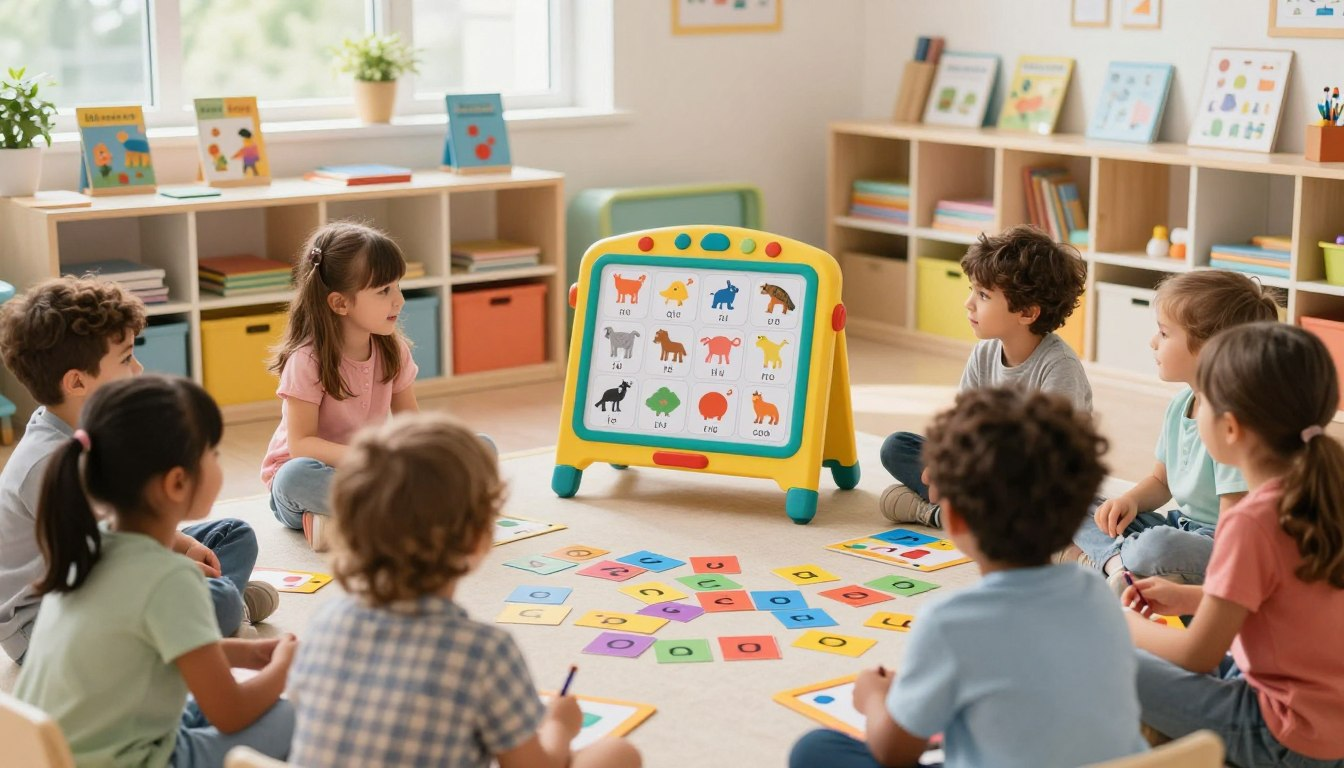
Have you ever wondered why some kids suddenly get reading? Reading readiness activities can be super fun. They turn simple things into tools for learning.
Teaching phonics activities for 5 year olds is easy. You don’t need fancy kits. Just use things like colorful socks or spoons. It makes learning sound like a fun game.
This guide helps make learning fun. It turns busy days into small wins. Families learn to love books without stress. It’s time to make reading a fun part of every day.
Why Blending Is the Key to Reading Success at Age Five
Blending is very important for kids to read well at five. They start to mix sounds together to form words. This is key for reading smoothly.
Playing fun phonics games and interactive learning makes learning fun. These activities help kids practice blending through play. This builds a strong base for their reading skills.
The Connection Between Blending and Reading Fluency
Blending helps kids read better because it makes decoding words easier. When they blend sounds well, they read more smoothly and accurately.
This skill is vital for reading fluency. It lets kids understand what they read, not just sound out letters. So, kids who blend well read with more confidence.
| Blending Skill Level | Reading Fluency Impact | Example Activity |
|---|---|---|
| Basic Blending | Improved decoding of simple words | Sound Box Blending with Building Blocks |
| Advanced Blending | Enhanced reading of complex words and sentences | Blending Bingo with Digraphs |
| Proficient Blending | Increased reading speed and comprehension | Speed Blending Challenge |
What Makes Five the Ideal Age for Blending Practice
Five is a great age for blending because kids usually know sounds well by then. They’re also starting to learn to read. It’s a perfect time to start blending activities.
At five, kids love to learn and play with educational resources. Adding blending games to their day keeps them curious and excited about reading.
Understanding Your Five-Year-Old’s Phonics Readiness

Before starting phonics activities, it’s key to check if a child is ready. Knowing if a child is ready for phonics helps them learn blending and other reading skills. Kids can learn letters, sounds, and words through fun games.
Developmental Milestones for Blending Skills
At five, kids start showing signs they’re ready for blending. They can:
- Recognize and name letters
- Know the sounds of letters
- Blend simple sounds
When kids reach these points, they’re set for more challenging blending tasks.
Signs Your Child Is Ready for Blending Activities
Look for these signs that your child is ready for blending:
- Breaking words into sounds
- Making simple words like “cat”
- Being excited about reading and writing
If your child shows these signs, they’re ready for phonics lessons.
What to Do If Your Child Struggles
If blending is hard for your child, don’t worry. There are ways to help:
| Strategy | Description |
|---|---|
| Using engaging learning tools | Play games and do puzzles to make learning fun. |
| Providing phonics worksheets | Worksheets help practice blending and breaking words. |
| Focusing on early literacy skills | Make sure they know letters and sounds well. |
By adjusting how you teach, you can help your child improve their phonics skills.
The Foundation: How Blending Actually Works

Blending sounds is key to learning to read. It’s when you mix sounds to make a word. This skill is important for young readers.
“Blending is not just about reading words; it’s about understanding how sounds work together to form meaningful language,” says reading expert, Dr. Linnea Ehri. This is the base for young readers as they learn to read.
Breaking Down the Blending Process
Blending has a few steps. First, a child must know each sound in a word.
Then, they must keep these sounds in mind long enough to mix them together.
Lastly, they must say the mixed sounds as one word.
For example, blending “cat” means knowing the sounds /c/, /a/, and /t/. Then, they mix these sounds to say “cat.” This takes practice and patience.
CVC Words as Your Starting Point
CVC (Consonant-Vowel-Consonant) words are great for starting blending.
Words like “cat,” “dog,” and “sun” are simple and follow a pattern.
Building simple CVC words with magnetic letters is a good way to practice blending.
Starting with CVC words helps children build a strong blending foundation. It also boosts their confidence in reading.
Continuous Sounds vs. Stop Sounds Explained
Knowing the difference between continuous and stop sounds is key for blending.
Continuous sounds, like /m/ or /s/, can be stretched without changing.
Stop sounds, like /p/ or /t/, are made by blocking airflow and can’t be stretched.
Continuous sounds are easier to blend because they can be stretched.
For example, the sound /m/ can be stretched, making it easier to blend into words like “mom” or “man.”
Stop sounds need a more detailed understanding.
Children must learn to stop the sound sharply and then move to the next sound.
Practicing with words that have both continuous and stop sounds helps children become better readers.
Essential Materials for Phonics Activities for 5 Year Olds
For phonics activities with 5-year-olds, the right materials are key. You don’t have to spend a lot to give your child a great phonics experience.
Many things you have at home can help with phonics. For example, dry pasta, beans, buttons, or cotton balls are great for tracing letters. Shaving cream or sand in a tray is perfect for writing letters.
Free Household Items That Work Perfectly
Using things you already have at home is smart and fun. It saves money and makes learning creative. Here are some items you can use:
- Dry pasta or beans for tracing letters
- Shaving cream or sand for letter formation practice
- Cardboard boxes for creating sound boxes
- Old magazines for cutting out letters or pictures
- Markers or crayons for coloring and writing activities
These items make learning fun and interactive.
Worth-the-Investment Learning Tools
While home items are great, some tools are worth buying. They make learning phonics better. Here are some good ones:
- Phonics workbooks or activity books
- Letter tiles or magnetic letters
- Sound manipulatives like word building blocks
- Educational apps or online phonics games
These tools offer structured learning and make phonics fun.
Printable Resources and Worksheets
Printable resources and worksheets are also great. They give your child more practice and help reinforce phonics. You can find many free and paid options online.
Some popular types of printable resources include:
- Phonics worksheets for practicing sound-letter correspondence
- Word building activities using CVC words
- Blending mats for guided practice
- Phonics games and puzzles
By using these materials, you can make a fun and complete phonics program for your child.
Simple Blending Games to Start Today

Making phonics fun for 5-year-olds is easy with games. These activities teach kids to read and make learning fun. Games help young learners get better at reading.
Sound Box Blending with Building Blocks
Sound Box Blending uses blocks to teach blending sounds. It makes learning sounds fun and hands-on.
How to Set Up the Game
You need blocks and simple words for Sound Box Blending. Start with CVC words. For “cat,” push a block for “c,” one for “a,” and another for “t.”
As they push blocks, say the sounds. Then, blend them to form the word.
Variations to Increase Difficulty
Make it harder by using words with complex sounds. You can also time them to blend words fast.
Mystery Word Treasure Hunt
The Mystery Word Treasure Hunt is fun and teaches blending. It involves finding words around the house or classroom.
Game Instructions
Hide word slips around and give clues. Your child finds the word and reads it by blending sounds.
Why This Game Works
This game is great because it mixes fun with learning. It makes finding words exciting and challenging.
Blending Slide with Paper and Markers
The Blending Slide is a visual tool for blending sounds. It’s simple but very effective.
Creating Your Blending Slide
Draw three boxes on paper or a whiteboard. Write a CVC word in each box. Have your child read the word by sliding their finger.
Practice Progression
Begin with simple CVC words. Then, move to harder words. You can change the slide direction or use colors for sounds.
Movement and Multi-Sensory Blending Activities

Moving and using many senses in phonics helps kids blend sounds better. It makes learning fun and works well for young ones.
Phonics Hopscotch for Sound Sequencing
Phonics Hopscotch is a fun game for kids. They hop on squares to learn sound order.
Setup and Rules
Draw a hopscotch grid with numbers and sounds. Kids hop and say sounds as they land. They aim to mix sounds into words.
Jumping Jack Blending Exercise
The Jumping Jack Blending Exercise mixes movement with phonics. It’s great for blending skills and exercise.
Step-by-Step Instructions
Start with a jumping jack and a sound. Add more sounds and jumping jacks. Then, mix sounds into a word.
Playdough Letter Blending
Playdough Letter Blending lets kids play with letters and sounds. It’s great for young learners.
Tactile Learning Benefits
Playdough letters improve fine motor skills and phonics. It’s a hands-on way to learn sound blending.
Sand Tray Sound Writing
Sand Tray Sound Writing is a tactile activity for phonics. Writing sounds in sand is fun and teaches blending.
How to Practice Blending Through Touch
Write sounds in a sand tray. Then, ask kids to read and blend sounds into a word.
| Activity | Description | Benefits |
|---|---|---|
| Phonics Hopscotch | A hopscotch game with sounds or letters | Improves sound sequencing and blending |
| Jumping Jack Blending | Jumping jacks with sounds | Combines physical exercise with phonics practice |
| Playdough Letter Blending | Creating letters with playdough | Develops fine motor skills and reinforces phonics |
| Sand Tray Sound Writing | Writing sounds in a sand tray | Engages tactile learning and practices blending |
Interactive Technology-Based Phonics Games

In today’s world, fun phonics games on tech help five-year-olds learn to read. These games make learning fun and help practice blending sounds.
Many online sites and apps help young learners with phonics. They have cool features that are both fun and teach a lot.
Starfall ABCs and Blending Features
Starfall ABCs is a top online place for phonics learning. It has fun activities for blending sounds. It’s great for early readers.
The site is easy to use and lets kids learn at their own speed.
Teach Your Monster to Read Progression
Teach Your Monster to Read is loved for teaching phonics. It starts with simple sounds and gets harder. It keeps kids excited to learn.
Homer Reading App Activities
The Homer Reading App has games for all levels. It has fun activities for blending sounds and more. It makes learning fun and keeps kids challenged.
Setting Healthy Screen Time Boundaries
While tech games are good, we need to balance screen time. Parents should limit screen time and encourage other activities. This helps kids learn well.
Using these games in a balanced way helps kids learn phonics in a fun way.
Advanced Blending Games for Progressing Readers
As kids get better at reading, they need engaging and challenging activities. These activities help them improve their blending skills. It’s important to use more complex phonics games that match their growing abilities and keep them excited.
These games not only make reading smoother but also make it fun. By adding fun phonics games to their daily routine, parents and teachers help kids keep improving their reading skills.
Word Family Sorting Race
This game helps kids spot patterns in words and get better at blending. It’s a fun way to get kids involved in reading readiness activities.
Materials Needed
- A set of word cards with different word families (e.g., -at, -an, -in)
- A timer or stopwatch
- A flat surface for sorting
How to Play
Get the word cards ready and lay them face down. The child picks a card, reads it, and sorts it into the right family. The timer adds a challenge to see how many words they can sort in time. This game boosts quick thinking and word patterns.
Blending Bingo with Digraphs
Bingo is a classic game that can help with blending, focusing on digraphs. It’s a great example of an engaging learning tool that makes phonics fun.
Creating Your Bingo Cards
Make bingo cards with words that have digraphs (e.g., th, sh, ch). Call out the words, and have the kids mark the words on their cards. This game helps them recognize and blend digraphs in words.
Speed Blending Challenge
This timed game is great for improving blending speed. It’s a good way to see how fast and accurate a child can blend sounds.
Building Automaticity Through Timed Practice
Get a list of words with different levels of difficulty. Use a timer to challenge the child to read as many words as they can in time. This game boosts reading fluency and confidence.
By adding these advanced blending games to their learning, kids will keep getting better at reading. They’ll become more confident and skilled readers.
Group Phonics Activities for Classroom or Playdates
Children aged five love group phonics activities. They’re fun and help kids learn together. Classrooms and playdates are great places for kids to practice phonics and work as a team.
Blending Relay Race Instructions
A Blending Relay Race is a fun team activity. Kids stand in lines and teams face word cards. The first child runs to the cards, blends sounds, and runs back to tag the next one.
The team that blends the most words wins. It’s a great way to practice phonics together.
Partner Sound Building Competition
Children pair up and get letter cards. One child thinks of a word and gives clues. The partner tries to sound out the letters to build the word.
The child who builds the most words wins. It’s a fun way to practice phonics and work together.
Musical Chairs Phonics Edition
Make Musical Chairs phonics-focused. Play music and kids walk around chairs with word cards. When music stops, they sit and read the word.
If they get it right, they stay. If not, they’re out. The game continues until one child is left.
Collaborative Word Building Circle
Kids sit in a circle with letter cards. A child starts with a sound and gives a card to the next one. They keep adding sounds until they build a word.
This activity helps kids work together and practice phonics.
Experts say phonics should be fun and systematic. Group activities make learning phonics fun and effective.
“The more engaging and interactive the learning experience, the more likely children are to develop a strong foundation in phonics.”
Reading Expert
Tracking Progress and Troubleshooting Common Problems
To make sure a child is doing well with phonics, it’s important to check their progress often. You should also fix any problems that come up. Checking and giving feedback helps find where a child might need more help or practice.
Simple Assessment Techniques for Home Use
Parents can check their child’s phonics skills at home in simple ways. One good method is to use phonics worksheets that test blending. You can find these online or make your own with words that match your child’s level.
Another way is to do reading readiness activities that help with blending words. For example, use flashcards with CVC words and ask your child to read them out loud.
When Your Child Guesses Instead of Blends
It’s common for kids to guess words instead of blending sounds. To help, gently guide them to sound out the word. Using engaging learning tools like letter tiles or magnetic letters can make blending fun and less guessing.
Addressing Frustration and Maintaining Motivation
Children often get frustrated when they struggle with blending. To keep them motivated, make phonics practice fun and positive. Try adding games and activities they like. For example, you can play a blending game on a hopscotch grid or have a “word building” contest.
Knowing When to Take a Break
It’s key to know when a child needs a break from phonics. If they’re getting too frustrated, it’s time to stop and try again later. This helps avoid burnout and keeps learning fun.
Conclusion
Adding fun phonics games to daily life helps kids read better. Parents and teachers can make a big difference.
Games that are fun and interactive help kids learn phonics. It makes learning fun.
Using games that involve movement and technology keeps kids excited. It makes reading fun.
As kids get better, we should give them harder games. This helps them keep improving.
This way, kids build a strong reading foundation. It helps them succeed in school.
FAQ
How can parents tell if a child has developed the necessary early literacy skills to begin blending?
Five-year-olds show they’re ready when they know letter sounds and what letters mean. If they can break down simple words like “dog” into sounds, they’re ready. Watching for these signs makes learning fun, not frustrating.
What are the best educational resources for kids who find traditional reading lessons boring?
Make learning fun by moving away from the desk. Try games like Phonics Hopscotch or Mystery Word Treasure Hunt. Tools like Learning Resources tactile letter tiles or Bob Books make blending fun and hands-on.
Should I use phonics worksheets or focus entirely on interactive learning?
A mix of both is best. Worksheets from places like Education.com or Scholastic help with letters and sounds. But add fun activities like building words with LEGO bricks for a better learning experience.
Which digital platforms offer the most engaging learning tools for blending practice?
Apps like Starfall ABCs, Homer, and Teach Your Monster to Read are great. They make learning phonics fun with games. These apps give feedback and rewards, making practice at home effective.
What should I do if a child struggles with stop sounds while playing blending games?
Stop sounds like /b/, /d/, and /p/ can be hard. Tell the child to say the sound quickly and then move to the next sound. A “blending slide” on paper can help them see how to connect sounds better.
How often should we practice these phonics activities for 5 year olds to see progress?
Practice often, but in short sessions. Ten to 15 minutes a day is better than one long session. Mix up activities to keep learning fun and engaging.